
Picture this: you splash around the sink and never worry that the cabinet below will bubble, warp, or peel. That’s the daily peace a well-built 48-inch solid-wood vanity offers—ample storage plus a countertop that ships in the same crate. We bench-tested more than 20 contenders, rejected any particleboard or low-grade MDF that fails in humidity, and crowned seven stand-outs you’ll meet below.
How we chose the winners
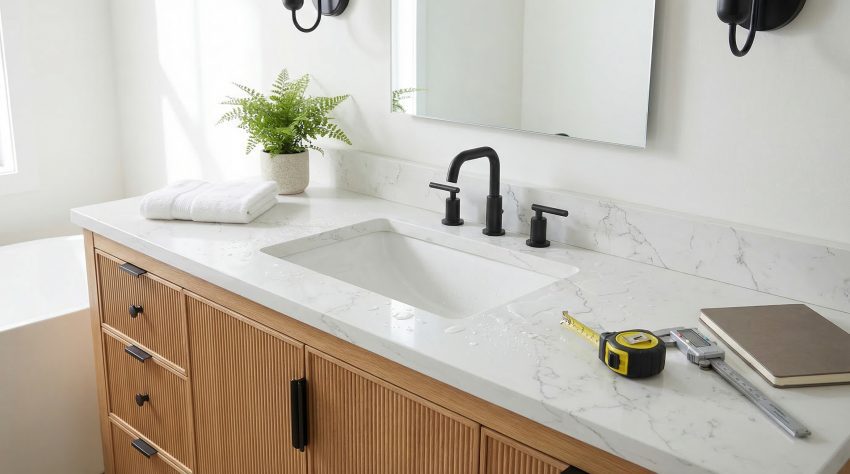
We began like any curious remodeler: we typed “48-inch solid-wood bathroom vanity with top” into Google and opened every high-ranking roundup, forum thread, and YouTube review we could find. Then we dug deeper. We pulled manufacturer spec sheets, scanned owner photos, and spoke with two installers who know which vanities fail during real-world plumbing tweaks.
From that research we built an 8-factor scorecard. Build quality and storage design carried the most weight because they decide whether a vanity still looks sharp after 5 years. Countertop durability and verified owner feedback completed the four primary factors you’ll see in each product write-up. The remaining metrics (style longevity, ease of installation, sustainability, and value) broke ties when scores were close.
We cut any cabinet built with particleboard or low-grade MDF; bathroom humidity ruins those materials quickly, and we refuse to recommend future landfill waste. We also axed kits that lack a countertop, vessel-sink combos that erase usable counter space, and models without at least a 1-year written warranty.
That filter left 20 serious contenders. We measured each sample with calipers, stress-tested drawer slides using a 20-pound toolbox, and compared every spec to our scorecard. The 7 survivors proved they can handle daily splashes, busy mornings, and the occasional dropped hair dryer without flinching.
In short, we did the homework so you can focus on finishes, not failure points. Here are the rankings.
At-a-glance comparison table
Before we look at each vanity, scan the table below. It lines up the 7 finalists so you can catch size quirks, material upgrades, and price swings in seconds. Mark the models that match your priorities and keep that short list handy when we unpack the pros and cons.
| Rank | Model | Sink layout | Countertop (included) | Storage layout | Frame & box materials | Typical price |
| 🥇 1 | Willow Bath & Vanity Manhattan 48″ | Single undermount | 3 cm white quartz | 5 dovetail drawers, 1 double-door cabinet | Solid plantation teak | $2,300–$2,600 |
| 🥈 2 | Eviva Aberdeen 48″ | Double undermount | Carrara-look quartz slab + 4″ backsplash | 6 drawers, 2 small door cabinets | Solid pine frame, plywood panels | $1,300–$1,500 |
| 3 | Deluxe Living Richfield 48″ | Apron-front fireclay | White engineered stone + 4″ backsplash | 6 drawers, 1 central cabinet | Solid oak or birch | $1,100–$1,200 |
| 4 | Modway Render 48″ | Integrated ceramic | One-piece ceramic top | 2 doors, open shelf | MDF with walnut laminate, solid wood legs | $700–$800 |
| 5 | Kubebath Bliss 48″ (wall-mount) | Integrated cultured stone | Cultured marble slab | 2 full-width soft-close drawers | MDF/plywood, high-gloss acrylic | $1,000–$1,200 |
| 6 | Wyndham Collection Daria 48″ | Single undermount | ¾″ Italian Carrara marble + backsplash | 6 drawers, 2 doors | Solid wood frame, furniture-grade plywood | $1,400–$1,800 |
| 7 | Woodbridge Sydney 48″ | Single undermount | Carrara marble or quartz | 4 drawers, 1 double-door cabinet | Solid rubberwood | $800–$1,000 |
A quick read of the grid already tells a story:
- Willow’s teak build and built-in power drawer explain its premium slot.
- Eviva fits two sinks into the same footprint, helpful for couples but tight on counter space.
- Modway wins on price and mid-century flair, though you trade solid wood for water-resistant MDF.
- Kubebath’s floating design makes tight baths feel larger and still stores plenty in two deep drawers.
Keep these trade-offs in mind as we explore each vanity’s real-world strengths and weak points.
Willow Bath & Vanity “Manhattan” 48″: teak luxury that resists humidity
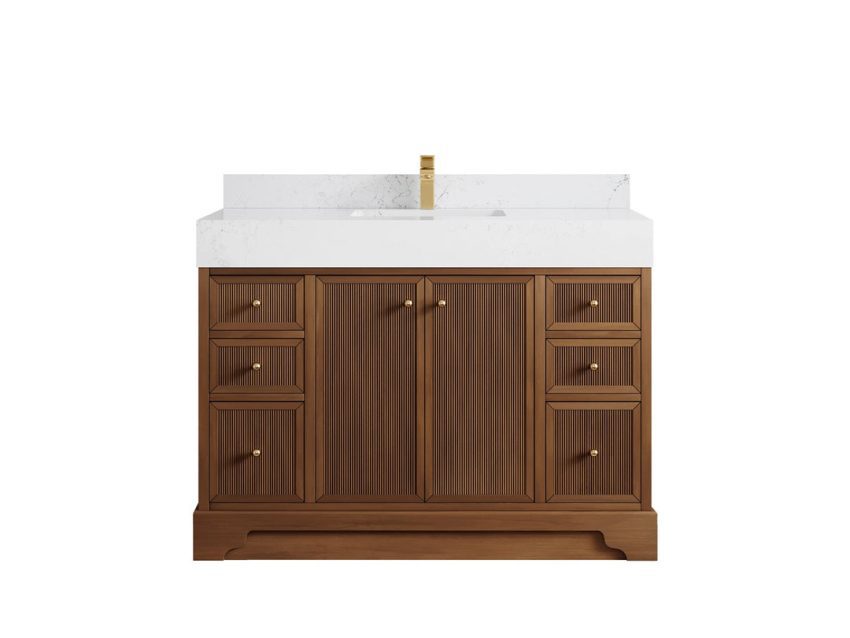
Open the crate and the weight is the first clue. At just under 200 lb (about 91 kg) before the quartz top goes on, Manhattan feels closer to heirloom furniture than a standard fixture. That heft comes from plantation-grown teak, an oily hardwood prized by boat builders because it shrugs off moisture, resists rot, and avoids warping in steamy rooms, according to Teak Deck Factory.
Run your hand across the reeded door fronts and you’ll find subtle grooves that hide fingerprints while showing off the wood’s golden grain. Pull any of the 5 dovetailed drawers and you get a soft-close whisper instead of a slam. The deepest drawer houses a power and USB hub, so hair tools charge out of sight and the counter stays clean.
The included 3 cm white-quartz slab arrives pre-drilled for an 8-inch widespread faucet. Quartz means zero sealing, zero staining, full stop. Paired with teak’s natural armor, the vanity treats puddles like a light sprinkle. Yes, the price sits north of $2,000, but if you want a statement piece that still looks photo-ready years from now, Manhattan is the long game.
Eviva “Aberdeen” 48″: two sinks, zero morning traffic jams
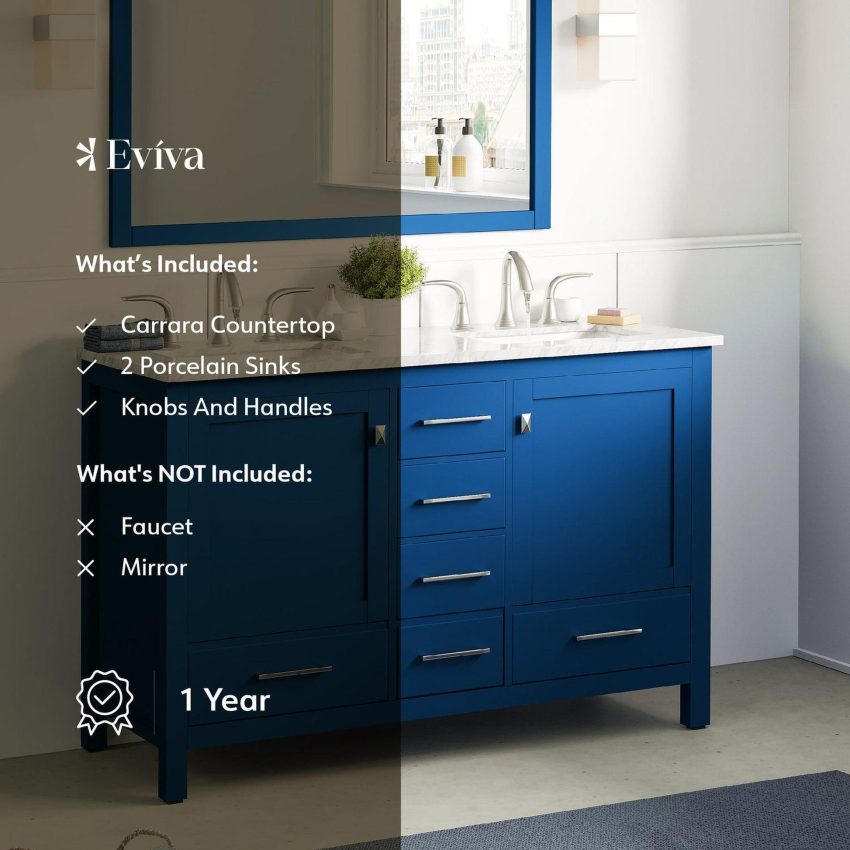
If sharing a single basin feels like rush-hour gridlock, Aberdeen clears the lane. Eviva fits 2 undermount porcelain sinks into a standard 48-inch frame, giving each person a faucet and drain without adding width.
The Carrara-look quartz top is cast as one continuous slab. Quartz shrugs off toothpaste, hair dye, and an occasional coffee spill, so weekends go to relaxing, not chasing stains. Below it sit 6 soft-close drawers divided evenly between the sinks plus 2 small door cabinets for backup supplies. Everyone gets a drawer; no one borrows yours.
Construction backs up the layout. A solid pine frame anchors the cabinet, while dovetailed pine drawer boxes extend fully so you can reach items in the back. Furniture-grade plywood side panels resist humidity far better than chipboard. The vanity ships fully assembled: set it in place, level it, hook up 2 faucets, and you are done.
Know the trade-offs. Counter space narrows to a slim bridge between basins, and the bowls sit closer than on a 60-inch vanity. Elbow bumps are possible if you both lean in. Plumbing is busier too, so alert your plumber if the current setup has a single drain.
Value is where Aberdeen shines. Around $1,400 delivered buys solid wood construction, a quartz top, twin sinks, and finish options from crisp white to navy blue with gold hardware. That is plenty of marital harmony for the price.
Deluxe Living “Richfield” 48″: farmhouse charm with a workhorse apron sink
Richfield swaps the usual undermount basin for a fireclay apron-front sink and turns a bathroom staple into a focal point. The glossy white apron projects slightly beyond the cabinet face, echoing classic farmhouse kitchens but scaled for a 48-inch space. You gain a deep 8-inch bowl that swallows splashy hand-washing and even the occasional baby bath without drenching the counter.
Under that sink lives real wood—oak or birch, depending on the finish—sealed in a matte paint that feels boutique rather than big-box. All 6 drawers are dovetailed and soft-close, and Deluxe Living cuts a smart U-shape in the top drawers so plumbing fits while storage stays usable.
The counter is a solid white engineered-stone slab with a 4-inch backsplash, pre-drilled for an 8-inch widespread faucet. Engineered stone wipes clean and never needs sealing. Pair it with the included matte-black cup pulls and the vanity nails the current rustic-meets-modern look.
Installation is straightforward. The cabinet arrives fully assembled, sink bonded to the top, feet leveled, and hardware aligned. Slide it in, connect one drain, and you are done. Just measure clearance: the apron protrudes about 1 in., so trim baseboard beforehand if your niche is exact.
Price lands around $1,150—impressive given that a comparable fireclay sink alone can cost several hundred. If you want cottage warmth and everyday practicality without custom millwork, Richfield makes a strong case.
Modway “Render” 48″: mid-century style on a renter-friendly budget
Render looks like a walnut sideboard that moved into the bathroom and decided to stay. Slim tapered legs lift it off the floor, an open slatted shelf keeps towels within reach, and flat-panel doors skip hardware for a clean 1960s vibe.
The cabinet uses water-resistant MDF wrapped in a walnut-grain laminate. No refinishing is needed, and small splashes wipe away easily. At roughly 85 lb, the vanity is light enough for a 2-person DIY install yet feels sturdy once leveled.
Up top, a single-piece ceramic counter with an integrated sink arrives drilled for a single-hole faucet. The one-piece surface leaves no caulk lines for grime to hide. Depth is a trim 18.5 in., so Render works where a standard 22-inch cabinet would crowd the walkway.
Storage favors display over stash. Inside the double doors you’ll find 1 shelf for cleaners, while the bottom rack suits rolled towels or baskets. If you need a dozen drawers, look elsewhere. If you want the room to feel bigger and love retro flair, Render delivers plenty of punch for under $800.
Kubebath “Bliss” 48″: float the cabinet, free the floor
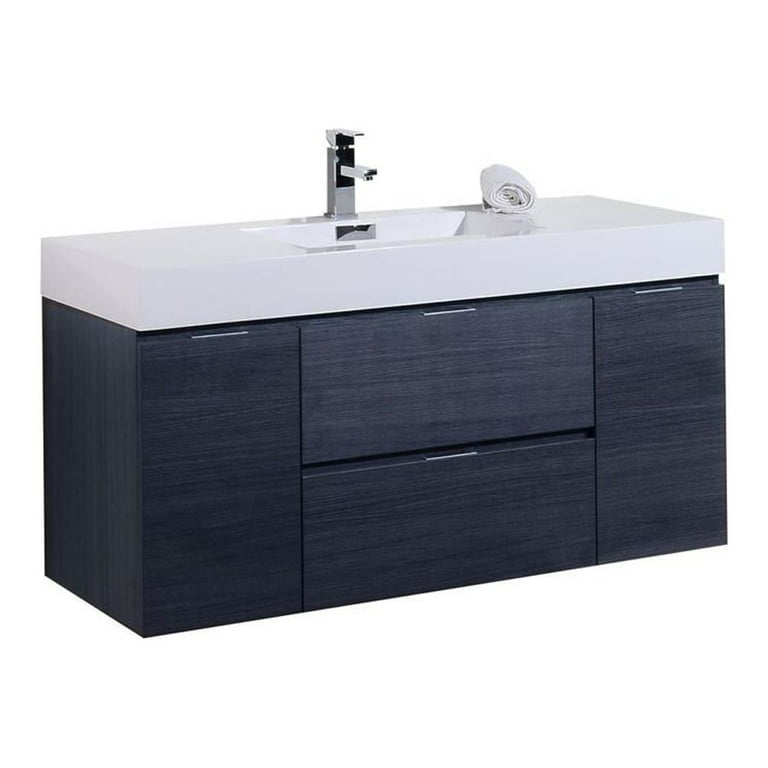
Want the bathroom to feel larger without moving a wall? Lift the vanity. Bliss mounts to studs and leaves 6 in. of open space below, so tile flows uninterrupted and a robot mop glides underneath. The floating install also lets you set the counter a little lower for kids or higher for tall homeowners.
The cabinet’s high-gloss acrylic finish wipes clean with one swipe, and soft-close metal drawers still glide smoothly when packed with full-size shampoo bottles. The top drawer wraps around the drain, perfect for toothbrushes and skincare. The bottom drawer is deep enough for folded towels, a hair dryer, and more.
A one-piece cultured-marble top arrives bonded to an integrated rectangular basin. No joints, no caulk, no mildew. It comes pre-drilled for a single-hole faucet that suits the minimalist look. Prefer a widespread faucet? Order the cabinet only and add your own stone slab.
Installation needs a stud finder and a level, not Olympic strength. A metal cleat screws into 2 studs, the 48-inch cabinet hangs on that cleat, and set screws lock it in place. Handy DIYers need about an hour. Just rough-in plumbing at standard height so supply lines and the P-trap sit inside the top drawer cut-out.
For roughly $1,100 you get modern European styling, generous storage, and an easy-to-clean floor. If you want a spa vibe in a tight space, Bliss earns a spot on the shortlist.
Wyndham Collection “Daria” 48″: storage king with a marble crown
Some vanities offer a drawer or two and stop there. Daria doubles that. 6 full-extension dovetailed drawers flank a double-door center cabinet, turning every inch into organized space.
Construction is solid. A kiln-dried hardwood frame supports furniture-grade plywood panels, all coated in a 12-step water-resistant finish. Choose classic white for spa calm, espresso for rich contrast, or go bold with navy blue paired with matte-black pulls. Wyndham even includes a spare set of chrome handles so you can change hardware without a store run.
The luxury touch sits on top: a 0.75-in. slab of Italian Carrara marble, factory-sealed and paired with a matching backsplash. Marble needs quick wipe-downs and an annual reseal, but its veining stays timeless. Prefer lower upkeep? Order Daria with a white cultured-marble top or as a cabinet only if you plan custom quartz.
Installation is straightforward but heavy. The vanity ships in 2 crates, base and top separate, for a combined weight of about 200 lb. Recruit a friend, set the base, level the feet, and apply silicone under the top. Plumbing is simple: one centered sink, one drain, one faucet. No juggling dual supplies.
At roughly $1,600, Daria lands mid-range on price yet leads on storage and color flexibility. If you want hotel-suite polish plus a place for everything, keep this model high on your list.
Woodbridge “Sydney” 48″: solid-wood fundamentals at a starter price
Sydney proves you do not need a luxury budget to own real hardwood. The frame and drawer boxes are solid rubberwood, a dense, renewable timber that outlasts particleboard. Open a drawer and you will see clean dovetail joints and soft-close slides that feel more upscale than the sub-$1,000 price tag.
The countertop lets you control cost. Choose engineered Carrara quartz for wipe-and-go convenience, or upgrade to genuine Carrara marble if you prefer natural veining. Both options ship with an undermount porcelain sink and matching backsplash, so installation stays straightforward.
Storage strikes a middle ground: 4 drawers flank a double-door center cabinet. The layout handles everyday toiletries while leaving room for taller cleaners under the sink. Painted finishes in white, light gray, or espresso suit most design schemes, and the simple Shaker fronts will look current for years.
Quality control in our testing was strong, but inspect the cabinet as soon as it arrives; freight dents are easiest to address before plumbing begins. Owner reviews also praise the packaging and Woodbridge’s quick part replacements.
If you are moving up from a builder-grade vanity and want durable materials without the premium bill, Sydney makes every dollar count. Add a statement faucet with the savings and the room will look like you spent more than you did.
How to choose the perfect 48-inch vanity
1. Measure your space, then measure again
Start with the obvious width: confirm the cabinet plus any countertop overhang fits between walls, trim, and shower glass. Most “48-inch” models measure 47.5 to 49 in., so double-check the spec sheet before you add one to the cart.
Depth matters just as much. Standard bath vanities run 21 to 22 in. deep, but narrow halls or door swings may need slimmer options like an 18.5-in. unit. Lay painter’s tape on the floor to outline the footprint and walk past it a few times to judge clearance.
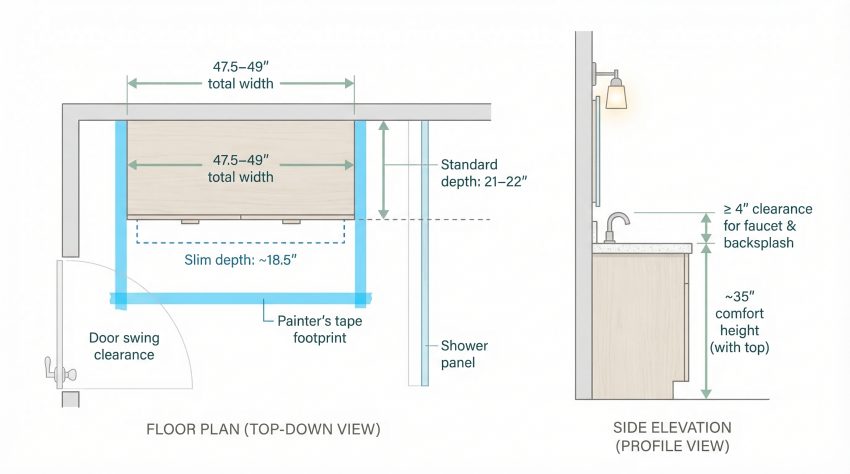
Height is next. Modern comfort-height vanities stand around 35 in. with the top installed. If your mirror, sconce, or medicine cabinet sits low, raising the counter could crowd the faucet. Measure from finished floor to the bottom of that mirror and leave at least 4 in. for faucet clearance and backsplash.
Map the plumbing last. Mark where the drain and shut-off valves exit the wall or floor. Compare those positions to the vanity’s cut-out or drawer layout so you are not forced to notch a brand-new drawer box on install day.
Get these numbers right and every other decision—style, wood species, countertop—becomes pure fun instead of a scramble for a return label.
2. Decide between single and double sink
A double sink sounds like relationship bliss, but in a 48-inch frame it is often a compromise. Two basins remove about 20 in. of counter width, leaving only a slim landing spot for soap. The bowls also shrink to salad-plate size, so rinsing a sweater or filling a vase becomes tricky.
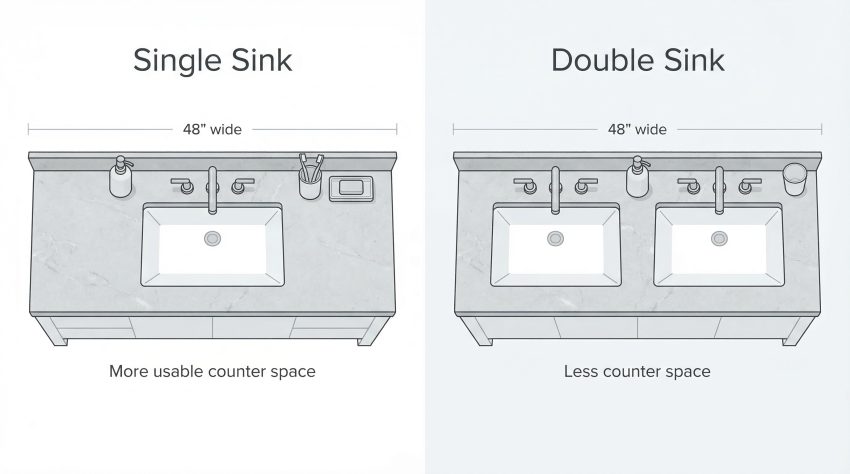
The upside is straightforward: simultaneous face-washing, tooth-brushing, and contact-lens juggling without elbow jabs. If you and a partner get ready at the same minute every morning, the Eviva Aberdeen proves that a compact double can work. Just confirm your wall drain can accept a tee fitting or be re-plumbed for twin traps before you buy.
For most households, a roomy single sink wins. You gain open counter space for skincare stations, electric-toothbrush docks, or even a decorative plant. Plumbing stays simple, cabinet storage opens up because only one drain shares the space, and faucet costs drop by half.
Use your daily routine as the tie-breaker. If overlap is rare, spend on storage and counter real estate instead of a second drain. Your future self, cleaning fewer crevices and paying one faucet bill, will be grateful.
3. Match the vanity to your plumbing, not the other way around
Peek inside the vanity photos before buying. If drawers crowd the center, the maker assumes water lines and the drain exit the wall about 18 in. above the floor. Floor-fed plumbing or a low, off-center trap will hit those drawers and force messy cuts.
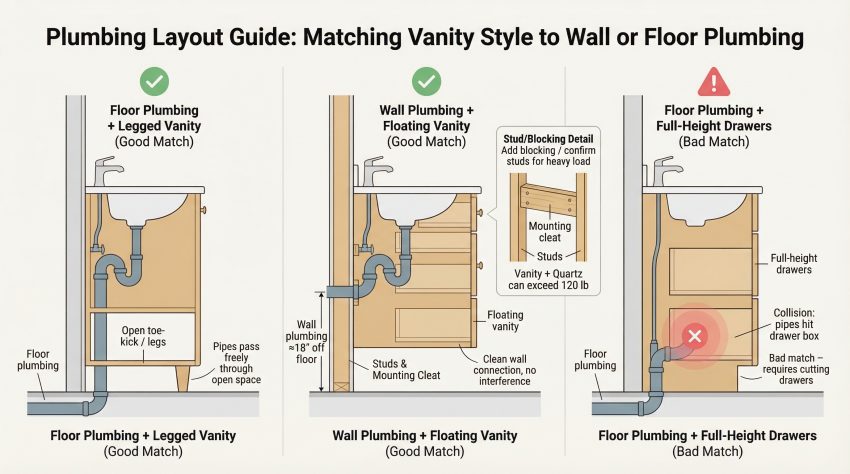
If your supply valves rise from the floor, pick vanities with an open toe-kick or furniture legs such as Richfield, Manhattan, and Sydney. Floating models, by contrast, need wall plumbing because their drawers fill the cabinet height.
Measure valve spacing too. A single sink wants hot and cold lines roughly 8 in. apart, centered under the basin. Double sinks need 2 sets of valves or long flex hoses that cross behind drawers, a recipe for kinks in tight spaces. When uncertain, send the spec sheet to your plumber for sign-off before purchase.
Wall strength also matters. A 48-in. floating vanity plus quartz easily tops 120 lb. Confirm at least 2 studs align with the mounting cleat, or add blocking before tiling. Skip this step and soft-close drawers could turn into soft-fall vanity.
4. Know your materials: solid wood, plywood, and MDF explained
“Solid wood” sounds like a guarantee, but you still need to check the fine print. The strongest cabinets pair hardwood frames and drawer fronts with furniture-grade plywood boxes. Teak, oak, birch, and rubberwood handle steam well, while plywood’s cross-laminated layers resist warping better than a single wide plank, keeping doors square and drawers smooth year after year.
MDF has a clear role: it creates perfectly flat painted surfaces and crisp Shaker edges. High-end builders seal every face and edge to block moisture. When sealed, MDF performs well; leave a raw cut exposed and it swells like a sponge. In practice, MDF on door centers is fine, but MDF on a cabinet base invites trouble.
Skip particleboard entirely. Those large wood chips and glue crumble when a pipe drips. We rejected every vanity that relies on it because bathroom humidity turns it into mush.
Quick test while shopping: open a drawer and inspect the side. Layered plywood or visible hardwood grain is a green light. Coarse chips mean particleboard; close the drawer and move on.
5. Pick a countertop that matches your maintenance style
Natural marble is the Instagram favorite, and each slab of Carrara tells its own story in gray veining. The flip side is upkeep. Marble is porous; leave hair dye or toothpaste on it for an hour and you risk a permanent stain. Plan on sealing once a year and wiping spills immediately.
Quartz delivers the marble look without the homework. Pigments and ground quartz fuse with resin to create a non-porous surface that shrugs off coffee, makeup, and lemon juice. No sealing required. The trade-off: extreme heat can discolor resin, so set a trivet before you park a curling iron fresh off the plug.
Cultured marble and other solid-surface blends sit in the value lane. They are joint-free, affordable, and easy to clean, but can scratch if you treat them like a cutting board. Small nicks usually buff out with a polishing kit, making these tops ideal for guest baths that see lighter duty.
Fireclay, used in our farmhouse pick, integrates the basin and apron in one kiln-fired block. It is nearly impervious to scratches and acids, though a dropped cast-iron pan can chip the glaze. If you want a sink that doubles as a baby tub and still looks fresh 5 years later, fireclay meets the challenge.
Match the material to your cleaning personality. If you baby nice finishes, marble rewards. If you prefer wipe-and-walk-away, quartz or cultured stone will keep you smiling.