
Key Takeaways
- Regular maintenance can significantly extend the lifespan of your gas furnace.
- Simple tasks like changing air filters and keeping vents clear can improve efficiency.
- Professional inspections help identify and address potential issues early.
- Upgrading to a programmable thermostat can reduce wear and tear on your system.
Ensuring the longevity of your gas furnace goes beyond just keeping your home warm during winter. Regular maintenance is a strategic investment that pays off in fewer breakdowns, greater efficiency, and a safer living environment. Proactive care helps you catch small issues before they turn into costly repairs, making maintenance essential for every homeowner. If problems arise, it is vital to turn to a professional gas furnace repair service to address them quickly and efficiently, safeguarding your home’s comfort and safety.
Routine maintenance tasks, when performed diligently, also help reduce energy bills by keeping your system running optimally. By combining basic do-it-yourself steps with periodic professional checkups, you can create a balanced approach to maintaining your furnace. This strategy minimizes unexpected disruptions and maximizes your furnace’s performance season after season.
A well-maintained gas furnace isn’t only an assurance for today but an investment in tomorrow’s efficiency and safety. A focus on regular upkeep adds valuable years to your furnace’s life, delays the need for costly replacements, and consistently provides reliable heat throughout your home.
Understanding the Importance of Regular Maintenance
Most gas furnaces are engineered to last 15 to 20 years, but neglecting regular maintenance can shorten that window considerably. Without proper attention, dust, debris, and wear can accumulate inside the system, forcing the furnace to work harder and increasing the likelihood of breakdowns. Regular check-ups, including inspections and lubrication of moving parts, help your furnace maintain peak efficiency while reducing the risk of hazardous malfunctions such as gas leaks or carbon monoxide exposure.
Staying ahead of problems saves money in the long run and helps avoid the inconvenience of unexpected heating failures during cold seasons. According to experts, catching and addressing small issues early can prevent expensive emergency repairs and safeguard your family’s well-being. Industry guidelines, such as those published by Angi’s home services guide, spotlight why proactive maintenance benefits both comfort and safety in your home.
Simple Maintenance Tasks for Homeowners
Although scheduling annual service with a trained technician is crucial, there are also important tasks homeowners can and should perform throughout the heating season:
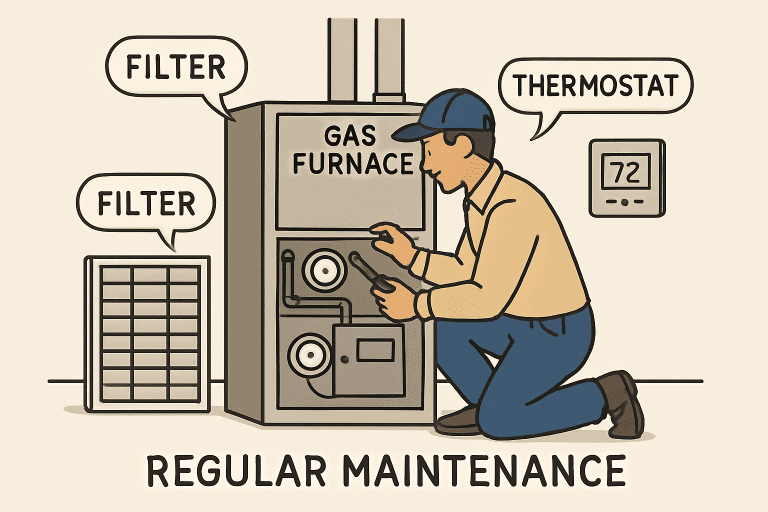
- Replace Air Filters Regularly: A clogged or dirty air filter can impede airflow, forcing your furnace to work harder and reducing its lifespan. Examine the filter monthly and replace it every 1 to 3 months, depending on your use and any pets or allergies in the household.
- Keep Vents and Registers Clear: Blocked vents prevent even heat distribution, which in turn puts additional strain on the furnace. Periodically check that no rugs, furniture, curtains, or other objects hinder airflow from registers and vents.
- Monitor Thermostat Settings: Installing a programmable thermostat can lead to more consistent temperatures while minimizing excessive cycling that can wear out the unit. This investment pays off by boosting comfort and extending your system’s lifespan.
Professional Maintenance: A Worthwhile Investment
Yearly professional inspections are invaluable to the health of your gas furnace. A qualified technician will conduct a thorough cleaning of critical components, check filters, inspect for leaks, and ensure the gas line connections are secure. They also test for carbon monoxide and other potential hazards, providing peace of mind. Professional maintenance delivers a more detailed evaluation than the average homeowner can provide and is essential for identifying small, hidden problems that might evolve into major failures.
Another benefit of professional service is documented inspections. Having a record of regular maintenance can be helpful if you ever need to file a warranty claim or sell your home, as buyers are likely to value a well-kept heating system.
Recognizing When to Repair or Replace
Even the most carefully maintained furnaces have a finite service life. Over time, you might notice recurring breakdowns, unusual noises, uneven heating, or a spike in energy bills. These are signs your system could be nearing its end. When such issues persist despite maintenance, an experienced technician can help you weigh the benefits of continued repairs versus investing in a new, more efficient unit.
Experts often recommend replacing your furnace if repair costs exceed half the price of a new unit or if your system is more than 15 years old. Modern furnaces are not just more efficient; they also offer improved safety features and can significantly lower utility bills.
Conclusion
Regular gas furnace maintenance is not just a recommended routine; it is a key factor in ensuring the lifespan, efficiency, and safety of your home’s heating system. A balanced approach that combines homeowner diligence with professional expertise creates a reliable, comfortable home environment year-round. By prioritizing preventive maintenance, you protect your investment and ensure warmth even in the coldest months.