
Room signage is a navigation system that identifies spaces clearly and consistently, allowing people to move through buildings without hesitation or assistance. In any building with multiple rooms, clarity is not a design choice but a basic operational requirement. Employees, visitors, and service staff all expect to navigate interiors without stopping to question where they are or where to go next. When room identification is consistent and easy to understand, the entire building feels more organized and predictable.
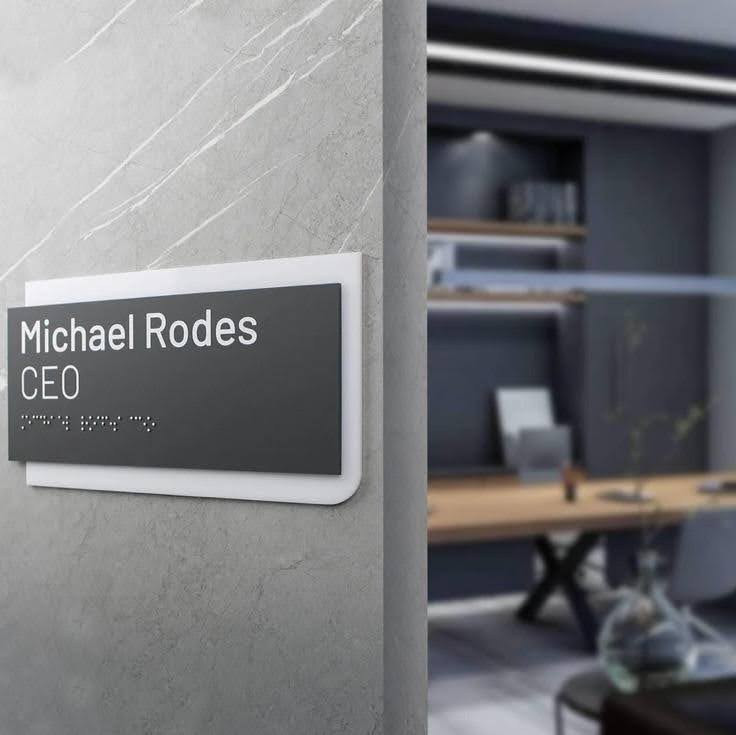
That sense of order comes from well-planned room signage that supports daily routines without drawing unnecessary attention to itself. Functional signage works quietly. It reduces questions, prevents mistakes, and saves time. When doors are clearly marked, people rely less on staff assistance and more on intuitive navigation. This is especially important in buildings where visitors may arrive stressed, in a hurry, or unfamiliar with the layout.
Clear room signage, available to buy on Bsign Store, becomes a reliable navigation tool rather than a decorative element.
What makes room signage functional
The primary role of room signage is to identify spaces quickly and unambiguously. Achieving this requires more than readable text. Signs must operate as part of a logical system that remains consistent throughout the building.
Effective room signage systems share three functional characteristics:
- communicate information that can be understood in a single glance;
- maintain identical placement rules on every door;
- preserve legibility of text and symbols over years of daily use.
When these conditions are met, navigation becomes almost automatic. People do not stop to analyze signs; they simply move forward with confidence.
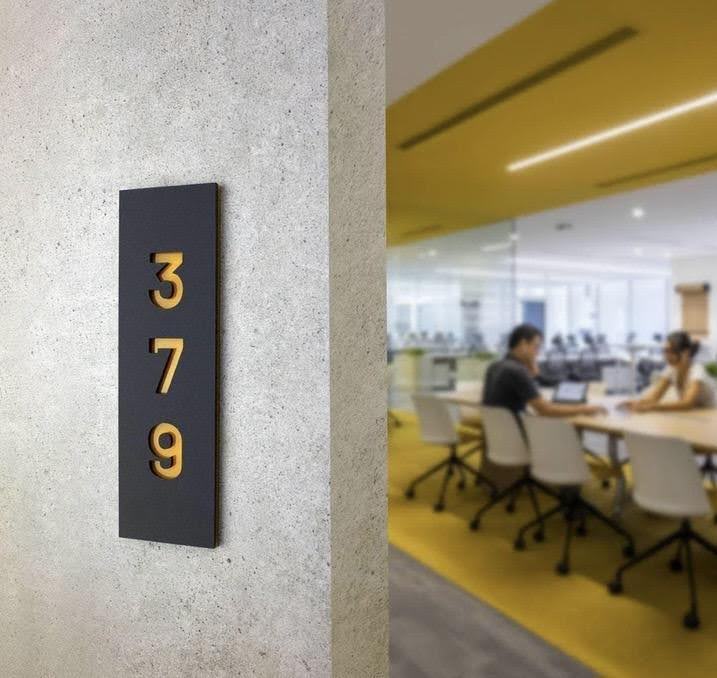
Where room signage plays a critical role
Room identification becomes especially important in buildings with frequent movement and shared spaces. Each environment has its own operational priorities, but the functional goal remains the same: clear and predictable orientation.
Room signage plays a central role in:
- office buildings, where meeting rooms, departments, and private offices must be easy to locate;
- hotels, where guests rely on room numbers and service labels to move independently;
- medical and educational facilities, where clarity reduces stress and supports efficient workflows;
- administrative and public buildings, where visitors expect structure without asking for help.
In these settings, signage is part of the operational system rather than a visual accessory.
Materials chosen for reliability
Functional room signage depends heavily on material quality. Signs must withstand daily contact, regular cleaning, and long-term exposure without losing readability. For this reason, production is limited to three proven materials:
- wood, which offers durability with a natural surface suited to calm, people-focused environments;
- stainless steel, which provides strength and resistance in high-traffic areas;
- acrylic glass, which ensures sharp edges and clean visibility in modern interiors.
All materials are suitable for wall-mounted and desk-mounted applications, keeping identification clear without adding unnecessary bulk.
Practical enhancements that improve usability
Beyond basic identification, functional signage can be adapted to specific needs without changing its core purpose. For greater accessibility, Braille can be added upon request, ensuring that room information remains available to all users.
Production methods also influence usability. Signs cut on CNC laser equipment maintain consistent dimensions, while permanent UV printing ensures that text and symbols do not fade over time. Handcrafted finishing adds reliability, particularly in environments where signs are touched frequently.
These technical details may not be immediately visible, but they define how well signage performs day after day. When identification is consistent, durable, and logically placed, it reduces friction in everyday movement. That reliability is what separates effective signage from signage that merely exists.