
Modern supply chains love to describe themselves in big, futuristic terms. Automation. Visibility. Connectivity. Real-time data. Predictive systems. All true, and all useful. But there’s a quieter reality underneath that language: even the most advanced operation still depends on physical components doing small jobs reliably, over and over again. When one of those simple points of control fails, the wider system can wobble far more dramatically than anyone expected.
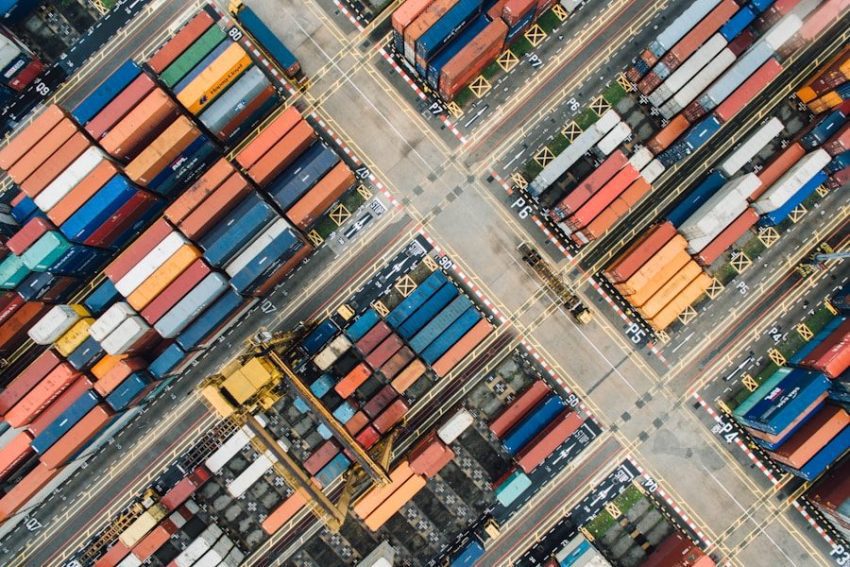
The Hidden Complexity Behind High-Tech Operations
That’s the paradox. The more sophisticated a supply chain becomes, the more it depends on thousands of apparently unremarkable components behaving exactly as intended. Smart factories, connected warehouses, automated access points, safety systems, and condition-monitoring setups all rely on dependable switching, sensing, and control at ground level.
Why Simple Components Still Matter in Advanced Systems
This is where low-tech parts earn their keep. Simpler components are often valued because they’re predictable, easier to maintain, and less likely to introduce unnecessary complexity into an already complex system. In industrial environments, that kind of stability matters. It means fewer failure points, easier troubleshooting, and better long-term confidence in how systems behave under pressure.
In other words, high-tech systems don’t replace simple engineering. Usually, they depend on it. Reed switches are a good example. A reed switch works through a simple magnetic principle: when a magnet or electromagnetic coil approaches, the ferromagnetic reeds move together and close the circuit, then separate again when the field is removed. It’s an elegant bit of proven engineering, and part of its appeal is precisely that it doesn’t need to be more complicated than that.
Reed Switches and Magnetic Switches in Real-World Applications
A reed switch might be small, but its uses are not. Reed-based and magnetic switches are commonly used in monitoring, access control, position sensing, and safety-related applications where consistent switching matters.
RS’s range of magnetic and reed switches reflects that breadth, with products intended for different industrial requirements and installation formats. In demanding environments, proven technology often survives not because it is old, but because it keeps doing the job. Standex also notes that reed switches can be used in virtually any environment and that quality testing is critical to fault-free operation.
Building More Resilient Supply Chains from the Ground Up
The lesson is straightforward. Supply-chain resilience is not built only through dashboards, platforms, or software layers. It is also built through smart component choices. Better uptime, lower maintenance, and more dependable compliance often begin with well-specified, trusted parts that reduce risk instead of adding to it.
For engineers and buyers, that means thinking beyond innovation as novelty and treating simplicity as a strategic asset. In high-tech supply chains, the humble reed switch and other magnetic switches are a useful reminder that resilience often starts at the bottom.