
Key Takeaways
- Match the garage floor coating to how the space is actually used.
- Inspect the concrete and address cracks, damage, old coatings, and moisture before installation.
- Compare epoxy, polyurea, polyaspartic sealers, and paint based on durability, maintenance, and budget.
- Proper surface preparation is important for coating adhesion and performance.
- Consider slip resistance, especially in areas exposed to rain, wet vehicles, and water.
- Choose a finish that balances appearance, cleanability, and everyday wear.
- Ask installers about preparation, moisture testing, curing time, maintenance, and warranty coverage.
- Asheville’s humid and rainy conditions should be considered when selecting and maintaining a garage floor system.
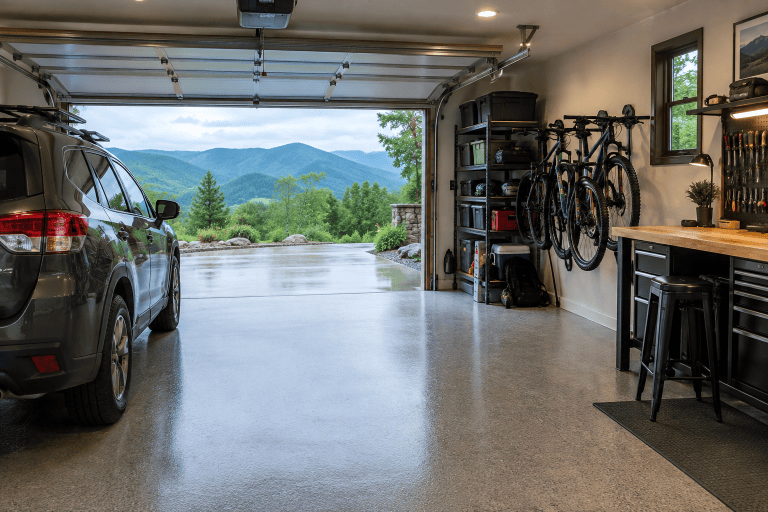
In Asheville, NC, a garage can serve as a daily parking space, mountain-bike staging area, woodworking shop, home gym, or storage room for gear that does not belong in the house. The right floor system should make that space easier to use while protecting the concrete from dirt, vehicle fluids, dropped tools, and regular wear. Speaking with experienced garage floor contractors in Asheville, NC, can help homeowners match the coating system to the condition of their slab and how the garage is actually used. Local conditions in Asheville matter significantly. The area’s rainy climate, muddy shoes, wet vehicles, pollen from the surrounding Blue Ridge Mountains, and changing temperatures can all make an unfinished concrete floor harder to keep clean. A well-planned coating does not eliminate the need for care, but it can create a sealed, more cleanable surface and reduce the dust that bare concrete may release over time.
Why Garage Floor Coatings Matter in Asheville
A garage floor absorbs more punishment than many interior surfaces. Tires bring in grit and water, shelving concentrates weight at small contact points, and a project can involve oil, paint, cleaners, or sharp tools. A properly specified coating can make spills easier to address and give the garage a finished appearance. Its performance, however, depends heavily on surface preparation, repairs, moisture evaluation, and allowing every layer to cure as directed. Before choosing a color or material, Asheville homeowners comparing garage floor contractors near me should define the job the floor must perform. That simple step prevents a light-duty solution from being asked to perform like a workshop-grade system.
Start With How the Space Is Used
- Parking only: Prioritize resistance to common automotive spills, ease of cleaning, and a finish designed for vehicle traffic.
- Home workshop: Look for a durable system with chemical resistance, impact tolerance, and a walking texture appropriate for the work performed.
- Home gym: Consider traction and how the coating will work beneath rubber mats or exercise equipment. Use protective pads under concentrated loads when needed.
- Storage area: Choose a finish that tolerates shelving, boxes, and frequent foot traffic. Patterned finishes can make small marks and dust less noticeable.
- Multi-use garage: Balance cleanability, traction, appearance, and durability rather than selecting a product for only one activity.
Compare Common Coating Materials
Epoxy
Epoxy coatings are widely used for their hard finish, strong adhesion when applied over properly prepared concrete, and broad color options. They can provide useful chemical resistance, but product quality and installation methods vary substantially. Surface movement, ultraviolet exposure, slab moisture, and insufficient preparation can affect results, so the complete system matters more than the label on a single can.
Polyurea and Polyaspartic Systems
Polyurea materials are often valued for flexibility, abrasion resistance, and fast curing. Polyaspartic products are commonly used as protective topcoats because they can provide clarity and UV stability. Fast-curing materials can be helpful when a household needs the garage back in service promptly, but the shorter working time also makes experienced application important.
Sealers and Paint
A basic sealer may suit a lightly used storage space, while paint can offer a lower-cost cosmetic update. These options are not automatically equivalent to a thicker, multi-layer coating system. Homeowners should weigh the initial budget against expected traffic, preparation needs, repair expectations, and desired service life.
Check the Concrete Before Coating
Coatings should not be used to disguise major slab problems. Inspect the floor for crumbling or flaking areas, oil-soaked spots, old paint or adhesive residue, uneven sections that hold water, and cracks that appear to widen or shift. Cracks may be repairable, but filling them without addressing active movement can produce a temporary cosmetic result rather than a permanent fix. Mechanical preparation is also critical. Grinding or other appropriate preparation methods remove weak surface material and create a profile that helps the coating bond. Skipping this stage is one of the most avoidable causes of poor adhesion.
Test for Moisture Problems
Concrete can look dry at the surface while moisture vapor moves through the slab. Bubbling, white mineral deposits, damp perimeter areas, or a previously failed coating are reasons to investigate further. Ask the installer how moisture will be evaluated and whether the proposed system is suitable for the findings. Moisture and salts can contribute to concrete durability concerns, which is why research on protecting concrete from moisture and salt is relevant when assessing an aging garage slab. In Asheville’s climate, water tracked in from wet driveways and outdoor projects makes prompt cleanup especially practical.
Build In Slip Resistance
A glossy floor is not inherently unsafe, but a smooth surface can become more challenging when wet. This deserves attention near garage doors, entry doors, vehicles, utility sinks, and workbenches. Fine anti-slip additives may provide a subtle texture, while more aggressive additives can improve grip but make sweeping more difficult. Texture should fit the space, not be added as an afterthought. The ongoing discussion of slip resistance for flooring materials also reinforces why homeowners should ask how an installer approaches traction and whether the finish is appropriate for wet-use areas.
Plan for Cleaning and Maintenance
- Sweep or dust mop regularly to remove abrasive grit.
- Wipe up oil, fuel, solvents, and standing water as soon as practical.
- Use cleaning products approved for the specific coating system.
- Avoid abrasive pads, metal scrapers, and harsh chemicals unless the manufacturer permits them.
- Place mats, plywood, or protective pads beneath jack stands, heavy equipment, and concentrated loads.
Choose a Finish That Fits the Space
Solid colors create a clean, simple look, while decorative flakes can add visual depth and help disguise dust, small scuffs, and everyday debris. Lighter finishes may help reflect available light in a dim garage, while medium-toned blends can be practical for busy family spaces. View large samples in the actual garage because lighting, wall colors, and the garage door opening can change how a finish appears.
Questions to Ask Before Hiring an Installer
- How will the concrete be prepared?
- Which cracks, joints, or damaged areas will be repaired?
- How will moisture be evaluated?
- What layers are included in the proposed system?
- How long must the garage remain clear before foot and vehicle traffic can return?
- How will slip resistance be incorporated?
- Which cleaners and maintenance practices are recommended?
- What does the warranty cover, and what conditions are excluded?
Final Selection Checklist for Asheville Homeowners
The best Asheville garage floor coating begins with the slab, not the color sample. Confirm the garage’s primary use, concrete condition, moisture status, traction needs, expected wear, preferred appearance, maintenance routine, and installation schedule before selecting a specific system. Homeowners should also consider whether the space is mainly used for parking, storage, home projects, exercise, or a combination of activities, since each use can create different demands on the floor. Cracks, stains, old coatings, surface damage, and moisture concerns should be identified and addressed before installation. It is also helpful to ask about surface preparation, curing requirements, cleaning methods, warranty coverage, and the expected time before foot and vehicle traffic can resume. With those details in hand, Asheville homeowners can make a more confident choice that supports the way their garage functions every day in the region’s humid, rainy climate while providing a practical balance of appearance, maintenance, traction, and long-term durability.