
Norbert Vergez is a retired US Army colonel who spent more than 25 years in military service, including combat tours in Iraq, Afghanistan, and the Balkans, before transitioning to a career in commercial construction leadership. As a brigade-level commander working under the Office of the Undersecretary of Defense, he executed several new aircraft production, modification, and modernization programs, and he also commanded the School of the Americas Aircraft Maintenance Troop and served two tours as a Pentagon resource manager. His military honors include the Bronze Star, the Meritorious Service Medal, and the Order of Saint Michael. After retiring, Norbert Vergez became director of capital projects for P3 Builds in Plano, Texas, where he oversaw roughly $10 million in construction projects annually. He holds graduate degrees from the Florida Institute of Technology and the US Army War College, a background shaping why military aircraft readiness depends on maintenance planning.
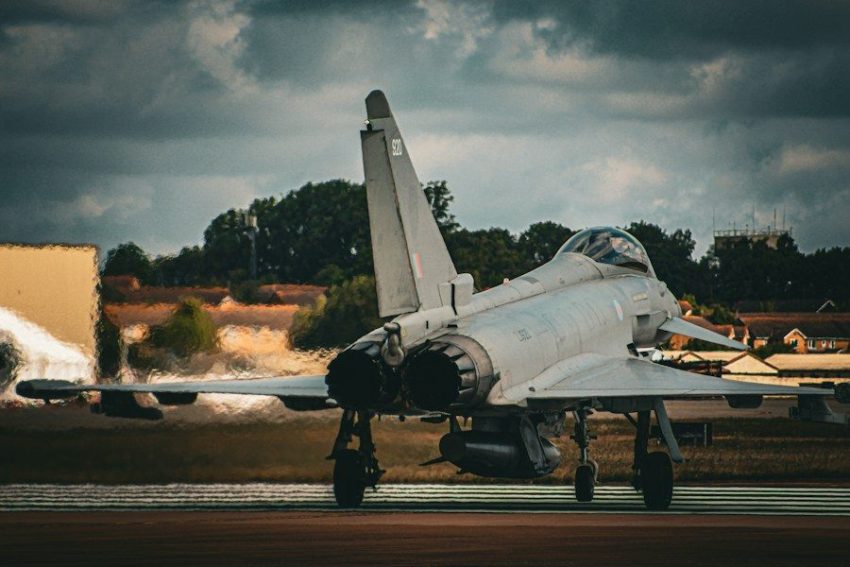
A military aircraft can appear ready when a crew can launch it for an assigned mission. That launch answers only a short-term question. Sustained readiness depends on maintenance teams keeping the aircraft available through repeated missions, inspections, faults, and repairs. Maintenance planning connects those demands to the parts, people, tools, time, and support needed to return aircraft to service.
Mission-capable rates provide one broader measure of aircraft readiness. The rate is the percentage of total time aircraft can fly and perform at least one tasked mission, while Army guidance separately describes ready-to-launch status as a short-term mission snapshot. Readiness analysis can then reveal maintenance, supply, personnel, or other sustainment limits that a single launch decision may not show.
Parts availability is a major readiness consideration. A mechanic may identify a fault quickly, but completing the repair still depends on obtaining the correct replacement parts. Planners also watch demand patterns because persistent shortages or constrained supply capacity can contribute to wider aircraft-readiness problems.
Army maintenance planning uses the P4T3 concept to coordinate the problem, people, parts, plan, time, tools, and training for a task. Technical assistance may also matter when a repair exceeds local knowledge or authority. The framework matters because it gives leaders a pre-work check. The framework gives leaders a structured pre-work check and helps them determine whether the unit has the resources and support needed to complete the planned maintenance.
Scheduled maintenance creates a different readiness risk. Aircraft inspections and service actions may depend on operating hours, flight cycles, calendar time, or condition-based criteria. Planners look ahead because scheduled work can remove an aircraft from the flight line even when no new fault has appeared. Preparation reduces downtime by making parts, tools, manuals, and labor available before the maintenance window starts.
People also affect readiness. A unit may have mechanics available, but a task may require current training, airframe familiarity, supervision, or recent practice on that type of work. Maintenance leaders have to match the job to the people who can perform it correctly. Broad aviation experience does not make every aircraft task interchangeable.
Technicians need the right tools and technical resources to verify a repair. Some tasks require special tools, ground-support equipment, current technical manuals, calibrated test equipment, or technical assistance before technicians can inspect, test, or release the aircraft. The right people and parts may still be insufficient if the unit lacks equipment or technical resources required to complete and inspect the maintenance properly.
Records make readiness visible to people who were not present during the repair. Maintenance forms and systems show aircraft condition, inspection status, open faults, completed work, and changes that affect later decisions. Accurate documentation helps commanders and maintenance leaders see whether an aircraft is ready for flight, whether restrictions still apply, or whether another action remains open.
Some readiness limits extend beyond the unit. A problem may require sustainment or depot maintenance, contractor support, logistics assistance, additional parts, or outside technical data and expertise. Maintenance planning helps determine which work falls within the unit’s capability and which problems require action elsewhere. That distinction can show whether a delay is a local repair issue or part of a broader sustainment problem.
Maintenance planning gives commanders a clearer view of readiness before aircraft availability drops. When planners know which repairs are coming, which resources remain constrained, and which support requests sit outside the unit, they can see where aircraft availability may decline next. That view helps leaders adjust earlier instead of discovering the limit only after an aircraft enters maintenance.
About Norbert Vergez
Norbert Vergez is a retired US Army colonel with more than 25 years of military service, including brigade-level command of new aircraft production and modernization programs and combat tours in Iraq, Afghanistan, and the Balkans. He later served as director of capital projects for P3 Builds, a commercial construction firm in Plano, Texas, overseeing contract acquisition and roughly $10 million in annual projects. He holds graduate degrees from the Florida Institute of Technology and the US Army War College and enjoys history and motorcycling in his free time.