
Key Takeaways
- A heat pump can cool well but still have trouble switching to heating mode.
- Thermostat settings, airflow, electrical components, refrigerant performance, and the reversing valve can affect heating.
- Homeowners can safely check settings, airflow, and visible conditions without opening equipment panels.
- Supply air from a heat pump can feel less intense than furnace air, so the indoor temperature trend is more important than a single reading.
- Breaker trips, smoke, persistent ice, burning smells, and no-heat conditions call for professional service.
In Anaheim, California, a heat pump may spend much of the year cooling a home through warm afternoons and mild evenings. That can be surprising when the same system does not respond properly during a cold spell. A safe seasonal test can help uncover trouble early. At the same time, a qualified heat pump repair service in Anaheim can diagnose electrical, airflow, refrigerant, and control issues that should not be handled as do-it-yourself repairs. Heat pumps transfer existing heat rather than generate warmth by burning fuel. In cooling mode, they move indoor heat outdoors. In heating mode, they reverse that process, drawing available heat from the outside air into the home. The basic heat pump operating cycle explains why a single piece of equipment can provide both heating and cooling yet still develop a problem that appears only in one mode.
How Heat Pumps Work in Heating and Cooling Modes
The compressor and refrigerant circuit move heat. Coils inside and outside the home exchange heat with the surrounding air. When cooling is needed, the indoor coil absorbs heat from the house. When heating is needed, the system changes the refrigerant path so that the indoor coil releases heat into the living space. A component called a reversing valve helps direct that change. Because heating depends on a successful mode change, a system may appear normal during Anaheim’s warmer months but reveal a control or mechanical problem once heating is requested.
Why Cooling Can Work While Heating Does Not
A thermostat must send the correct call for heat, and the equipment must respond by changing modes. If a wire, control board, reversing valve, or related electrical part does not respond correctly, the unit may continue acting as though it is cooling or may fail to operate at all.
Common Causes Of Heating-Mode Problems
- A thermostat is set incorrectly, has a schedule conflict, or is not sending the proper heating command.
- A reversing valve sticks or does not shift when the system calls for heat.
- A dirty filter, blocked return grille, or closed vents restrict airflow.
- Electrical components, such as capacitors, contactors, wiring, or controls, do not operate as intended.
- Low refrigerant performance affects the system’s ability to transfer heat.
- The indoor blower or outdoor fan does not run correctly.
Signs Your Heat Pump Needs Attention
One unusual sound or a brief blast of cooler air does not always prove the system has failed. However, several symptoms occurring together are a good reason to arrange an inspection.
- The thermostat displays HEAT, but the system never starts.
- The outdoor unit remains off during a heat call.
- Air feels cool for an extended period, and the room temperature does not rise.
- The system starts and stops unusually often.
- Airflow is weak at several supply vents.
- A breaker trips when heating begins.
- New grinding, buzzing, rattling, or repeated clicking sounds develop.
- Heavy ice remains on the outdoor unit, or water collects where it normally does not.
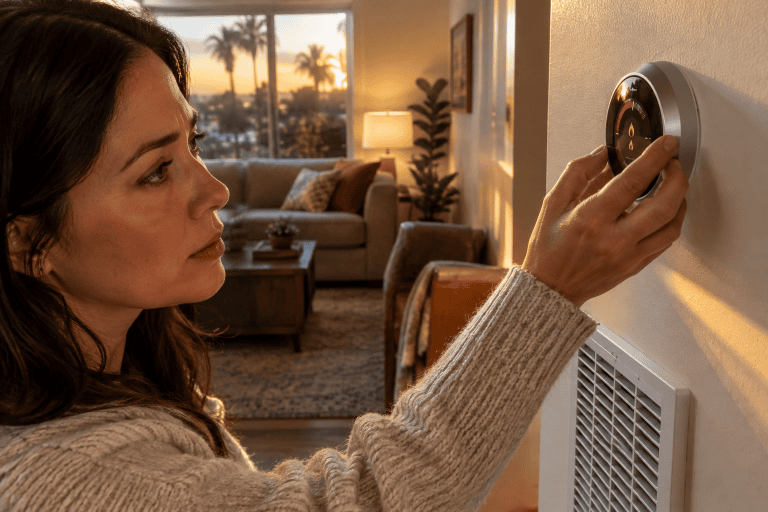
How To Perform A Safe Heating-Mode Check
This is an observation check, not a repair project. Do not remove panels, touch wiring, handle refrigerant, or bypass a safety control.
- Confirm that the thermostat has power and shows the current indoor temperature.
- Set the system mode to HEAT and the fan setting to AUTO.
- Set the thermostat a few degrees higher than the current indoor temperature.
- Wait several minutes for normal system delays and startup to complete.
- Listen for normal startup operation and check for airflow at multiple vents.
- Watch whether the home temperature gradually moves toward the thermostat setting.
- Stop the test and turn to professional help if a breaker trips, smoke appears, or a strong burning odor develops.
What Normal Heat Pump Air Feels Like
Heat pump air can feel gentler than the hotter air delivered by many gas furnaces. Judging performance by placing a hand over one register can be misleading. Instead, compare airflow at several vents and see whether the indoor temperature slowly rises during a complete heating cycle. A constant fan setting can also circulate air between heating cycles, which may feel cool even when the equipment is working normally. AUTO is generally the clearer setting for a basic heating test because the blower runs with the heating call.
Simple Checks That May Improve Performance
- Replace a visibly dirty filter with the correct type and size.
- Open supply vents and make sure furniture does not cover return grilles.
- Clear loose leaves, yard debris, and stored items away from the outdoor unit.
- Review thermostat schedules and smart-home settings that may override manual changes.
- Avoid rapidly switching between heating and cooling.
When Professional Service Is The Safer Choice
Refrigerant circuits, high-voltage electrical parts, compressors, control boards, and reversing valves need trained diagnosis and proper tools. Call for service if the system will not start after basic setting checks, the breaker trips more than once, the outdoor unit does not operate during heating, or the unit blows cold air through a full cycle. Persistent ice also deserves attention. Heat pumps can run a defrost cycle under certain conditions, but ice that does not clear, blocks airflow, or quickly returns may signal a problem. A heat pump’s reversing function is central to both heating operation and defrost performance.
How A Technician Diagnoses A Heating Problem
A responsible diagnosis starts by confirming thermostat settings, reported symptoms, and system history. The technician can then inspect airflow, test electrical operation, verify control signals, and evaluate the refrigerant circuit when needed. If the system fails to change modes, testing can help determine whether the reversing valve receives the correct signal and whether it shifts as expected.
Repair Or Replacement: Questions To Ask
- What specific part or condition caused the heating problem?
- What test confirmed that diagnosis?
- Is the repair covered by a parts or labor warranty?
- How old is the equipment, and are other major parts showing wear?
- Would the repair reasonably improve reliability for future seasons?
- Would replacement affect comfort, efficiency, electrical requirements, or permitting needs?
Maintenance Steps For Better Heating Performance
Before Anaheim temperatures dip, test heating mode rather than waiting for the first chilly evening. Check filters regularly, keep the outdoor unit clear, and pay attention to changes in noise, cycling, airflow, and comfort. Maintenance cannot guarantee that a component will never fail, but early testing can reveal issues when there is still time to review repair options and restore dependable comfort.
Conclusion
A heat pump that cools properly may still develop problems when switching to heating mode, so testing the system before colder weather arrives is important. Homeowners can start by checking thermostat settings, replacing dirty filters, clearing blocked vents, and observing the system’s performance without opening equipment panels. Since heat pump air may feel cooler than furnace air, monitoring the overall indoor temperature is a better way to assess heating performance. If the unit produces no heat, repeatedly trips the breaker, develops unusual noises or odors, or has persistent ice buildup, professional inspection is recommended. Addressing these warning signs early can help Anaheim homeowners identify repair needs and maintain reliable indoor comfort throughout the colder months.