
In Wake Forest, North Carolina, plumbing problems can start quietly. A slow bathroom drain, a damp cabinet floor, or a water heater that takes longer to recover may not seem urgent, but these clues can point to a developing issue. Paying attention early can help homeowners limit water damage, avoid disruption, and explain the problem more clearly if repairs are needed.
Whether a home uses municipal water or a private well, basic observation goes a long way. Homeowners who notice recurring symptoms can use Plumbing services in Wake Forest when a concern needs a closer diagnosis, especially when water is appearing where it should not, multiple fixtures are affected, or a problem keeps returning.
Table of Contents
- Why Small Plumbing Signs Deserve Attention
- How To Spot A Hidden Water Leak
- What Slow Drains And Gurgling Sounds May Mean
- Why Water Pressure Changes Matter
- Water Heater Problems To Watch For
- When Plumbing Odors Need A Closer Look
- Signs Of A Plumbing Emergency
- Simple Checks Homeowners Can Do Safely
- When To Contact A Plumbing Professional
Why Small Plumbing Signs Deserve Attention
Plumbing failures do not always begin with a dramatic burst pipe. A small drip can dampen wood over time, and a partial blockage can gradually restrict the drain line further. In homes with crawl spaces, basements, or plumbing hidden behind finished walls, moisture may remain unnoticed until staining, odors, or flooring damage appears. Treat persistent symptoms as useful information rather than an inconvenience.
How To Spot A Hidden Water Leak
Leaks may develop under sinks, behind appliances, around toilets, beneath floors, or inside walls. Watch for an unexplained increase in water use, peeling paint, a musty odor, soft flooring, damp cabinet bases, or stains on ceilings. A dripping or rushing sound in a quiet house also deserves attention.
One simple check is to stop all intentional water use, including dishwashers, washing machines, and irrigation, then note the water-meter reading and check it again after a short wait. If the meter changes, water may be moving somewhere in the system. Many common household leak points include toilet components, faucets, supply connections, appliances, and pipe fittings.
What Slow Drains And Gurgling Sounds May Mean
A single slow sink or shower drain may be caused by hair, soap residue, grease, or an object near that fixture. Several slow drains at once, however, can suggest a restriction farther along the plumbing system. Gurgling from a toilet or drain can occur when air struggles to move through the line as water flows.
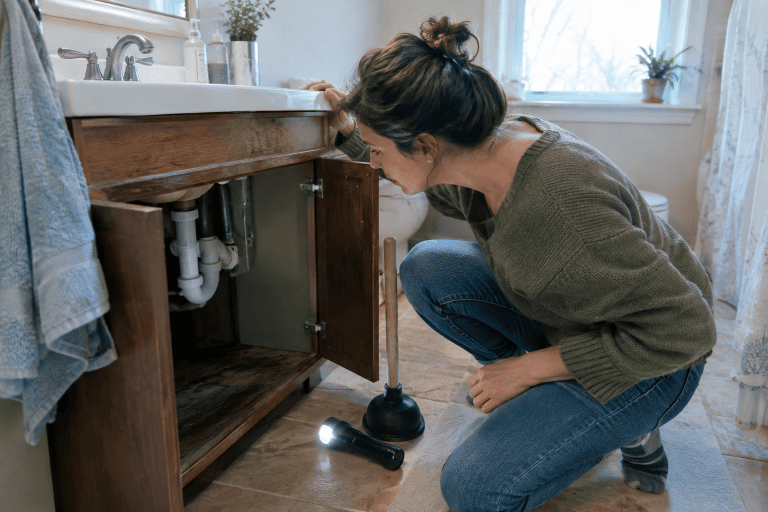
A plunger or careful removal of visible debris may help with a minor, isolated clog. Avoid making harsh chemical drain cleaners a frequent solution, since repeated use does not address the underlying cause of a line keeping clogged. Track which fixtures are involved and whether the trouble returns after temporary clearing.
Why Water Pressure Changes Matter
The pattern of a pressure change can narrow down the cause:
- One weak faucet: A clogged aerator or fixture issue may be involved.
- Weak hot water only: The water heater or hot-water piping may need inspection.
- Low pressure throughout the house: A supply valve, pressure-control component, leak, well system, or incoming water supply may be relevant.
- Pressure that fluctuates: A pressure-control or water-supply issue may be affecting the system.
Water Heater Problems To Watch For
Water that quickly becomes lukewarm, rusty-looking water from hot taps, popping or rumbling sounds, and pooling around a tank or its connections are all signs worth checking. A relief valve that drips repeatedly should also be evaluated, as it may indicate a pressure or temperature issue. Do not remove safety devices, open electrical panels, or attempt repairs involving gas connections without appropriate training.
When Plumbing Odors Need A Closer Look
Musty smells under a sink can indicate lingering moisture. A dry drain trap in an infrequently used bathroom, laundry room, or floor drain can allow sewer-like odors into the room; running water into that drain may restore the water seal. Persistent sewage odors, particularly when paired with slow drains, gurgling, or backups, should not be ignored. Leave the area and seek help promptly if an odor is strong enough to cause dizziness, nausea, or breathing discomfort.
Signs Of A Plumbing Emergency
Some plumbing situations should not wait for a routine appointment. Take prompt action when there is:
- A burst pipe or fast-moving leak.
- Water near electrical outlets, panels, or appliances.
- Wastewater backing up into sinks, tubs, or floors.
- A sagging ceiling or active leak from above.
- A main shutoff valve that will not stop the flow.
- A water heater leaking heavily or showing possible pressure trouble.
If it is safe, shut off the nearest fixture valve or the home’s main water supply. Keep away from contaminated water and electrical hazards, move valuables out of harm’s way, and photograph visible damage for records.
Simple Checks Homeowners Can Do Safely
- Locate the main water shutoff before an emergency occurs.
- Look under sinks and around toilet bases each month.
- Check exposed pipe connections for moisture or corrosion.
- Clean a faucet aerator when low flow affects only one fixture.
- Listen for water movement when the home is quiet.
- Keep notes on recurring clogs, pressure changes, and unusual water bills.
To check for a silent toilet leak, add a few drops of food coloring to the tank and wait before flushing. If color reaches the bowl, the flapper may be leaking. The EPA recommends this simple toilet dye test to identify water waste that may not leave a visible puddle.
When To Contact A Plumbing Professional
Professional diagnosis is appropriate when leaks are hidden, wastewater backs up, several drains are slow, pressure drops throughout the home, or a water heater shows signs of failure. Specialized equipment may be needed to locate concealed leaks or inspect drain and sewer lines. When requesting help, describe when the issue began, which fixtures are affected, what has already been tried, and whether the problem is worsening.
Common Questions About Plumbing Warning Signs
Is A Slow Drain Always Serious?
Not always. One slow drain may have a minor local blockage, but repeated clogs or slow drainage at several fixtures can point to a larger restriction.
Should A Dripping Faucet Be Repaired?
Yes. A drip wastes water and can indicate a worn internal part, loose connection, or fixture problem that may worsen over time.
What Should Be Done First During A Plumbing Emergency?
Shut off the water if it is safe, avoid electrical and wastewater hazards, and arrange prompt professional help.
Conclusion
Wake Forest homeowners do not need to diagnose every plumbing issue themselves, but they should pay attention to what their systems are communicating. Slow drains, damp spots, water-pressure changes, unusual odors, and water heater trouble can all be early warnings. A few safe checks can help identify the scope of the problem, while active leaks, backups, and hidden moisture require timely attention.