
Renovation projects begin with a mix of plans, visual references, and discussions about how the house should work after the changes are complete. Homeowners are usually shown a series of images that illustrate important spaces or design features. In some projects, architects also include 3D architectural animation as part of the presentation. Instead of focusing on a single viewpoint, the animation moves through the design and shows how the spaces connect as someone walks through the house.
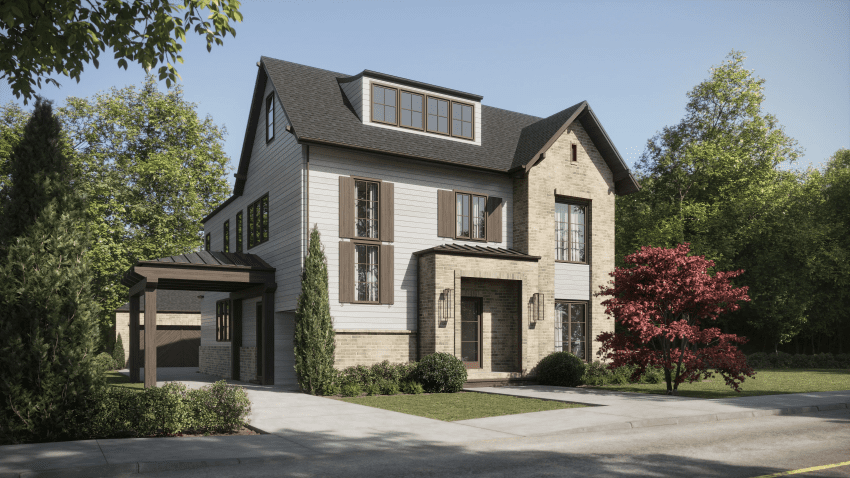
This format is not necessary for every project. Many renovations remain simple and easy to understand through individual visuals. But once a design starts to affect circulation, levels, or the relationship between indoor and outdoor areas, movement through the space becomes an important part of the conversation.
In those situations, animation helps homeowners see how the design behaves as a whole rather than as separate rooms.
When Renovations Change How the Home Works
Some renovations are mostly cosmetic. Others reshape the house.
Renovations that shift walls or add extensions often change how the house is used day to day. Movement through the space rarely stays the same. The kitchen might end up opening directly onto the terrace. In some homes the staircase moves to a new position and connects floors that once felt separate. In others, a narrow corridor disappears and the layout begins to flow more freely.
Animation helps illustrate these shifts. A short sequence can show how someone enters the house, moves toward the living areas, and continues through the new arrangement of spaces. For homeowners, this often makes the design easier to evaluate before construction begins.
Homes With Several Levels or Unusual Layouts
Certain houses are naturally harder to explain. Splitlevel homes, houses built on slopes, or interiors with tall open spaces often create complex relationships between floors.
In these projects the design may look clear when each space is viewed separately, yet the overall organization still feels abstract. Animation reveals how the levels connect and how the architecture unfolds while moving through it.
This becomes particularly useful when a renovation introduces new architectural elements. These could be staircases, mezzanines, or internal balconies.
Outdoor Spaces That Become Part of Daily Living
Home renovations these days reach well past the front door. Terraces, gardens, pools, and outdoor dining areas have become genuine parts of how a home functions day to day, connected to interior rooms rather than sitting apart from them. Getting that transition right — from inside to outside — is something good design has to actively work out, not leave to chance.
A common flow might begin in the living room, move through a set of wide sliding doors, and spill out onto a terrace or a tucked-away garden seating area.
For the homeowner, being able to trace that path is important. It gives a real sense of how the finished space will be used on an ordinary day — not just how it reads on paper.
Presenting the Design Through a 3D Walkthrough
In many residential projects the animation takes the form of an architectural walkthrough. The sequence follows a natural route through the house, similar to how a visitor would explore it in real life.
The camera might begin at the entrance, move toward the living room, continue through the kitchen, and eventually reach outdoor spaces or upper floors. The goal is not to highlight one single moment but to show how the architecture reveals itself step by step.
For homeowners reviewing a renovation proposal, this format often clarifies how the spaces connect and how the layout will feel once it is built.
Why Architects Do Not Always Include 3D Animation
3D animation takes real time to produce, so it doesn’t come standard on every residential project. For smaller jobs, it’s usually unnecessary. It starts to make sense when a design has complicated circulation, multiple levels, or a strong indoor-outdoor relationship — cases where a still image forces the client to fill in too many blanks. Moving through a space, even on a screen, gives a much truer sense of how it will actually feel.
That’s worth keeping in mind for anyone planning a major renovation. It may be wise to ask your architect upfront whether a 3D animation would help both parties to understand each other and move on faster. Most studios already have visualization teams they work with and can bring that format in when it genuinely helps.
At the end of the day, a renovation is about changing how a home feels to live in. When a project reshapes the way rooms connect and how people move between them, watching that play out in motion can make the whole thing easy to understand. Such clarity is most valuable before any construction starts.