
Tile has become one of the most influential design elements in modern interiors. Today’s tile layouts can completely transform the look and atmosphere of a room. From kitchens and bathrooms to laundry rooms and fireplaces, the right tile arrangement instantly adds personality, texture, and visual interest while also improving functionality and durability.
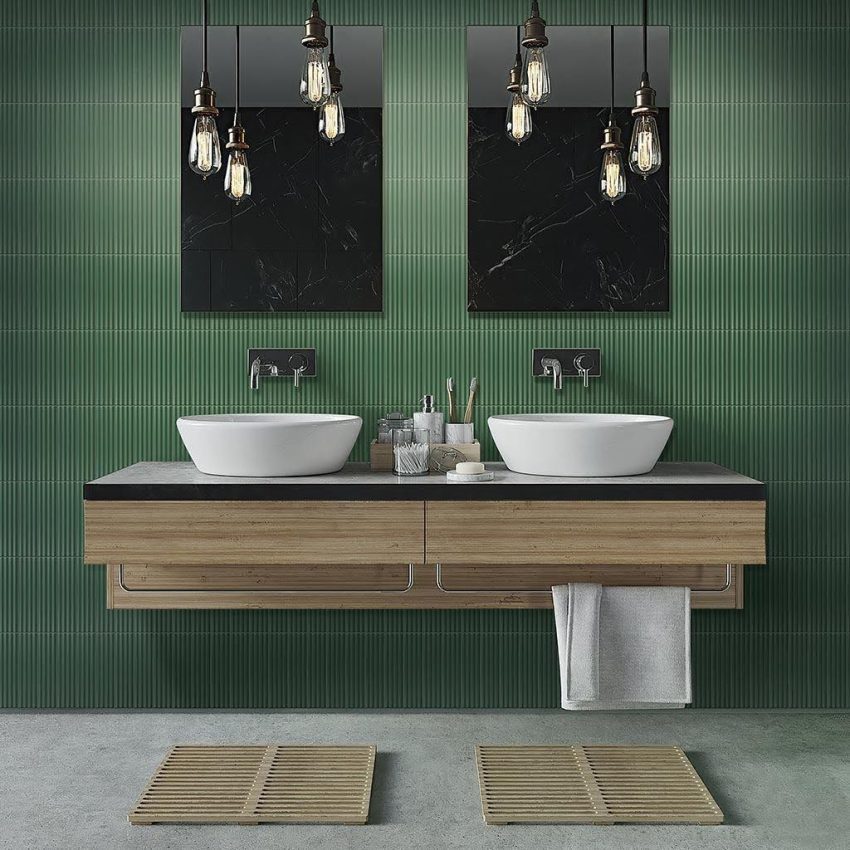
Homeowners and designers continue embracing modern stacked layout ideas that create clean lines and a smooth architectural feel. Vertical tile layouts, in particular, help make walls appear taller and spaces feel more open. This makes them perfect for modern homes that prioritize simplicity and style. Texture, layering, and nature-inspired finishes continue to shape contemporary interior design.
Vertical Stacked Subway Tile Layout
Subway tiles continue to remain popular in modern homes. Rather than using the traditional horizontal pattern, they can be installed vertically to make walls appear taller, creating an illusion of space. This layout works especially well with elongated tiles in a neutral color palette. It works beautifully in both kitchens and showers.
Floor-To-Ceiling Tile Walls
Tile is increasingly being used as a complete wall solution rather than just a decorative accent in modern homes. By incorporating tile into walls all the way up to the ceiling, homeowners can create a more seamless and visually striking interior. Such installations work best in bathrooms inspired by spa aesthetics as well as kitchens with minimalist looks. One of the trendy designs is the use of full-height wall coverage bathroom tile ideas that create a refined and upscale appearance. Large-format porcelain tiles are often preferred for these installations because they reduce visible grout lines.
Contemporary Checkerboard Tile
Checkerboard tile layouts are becoming popular again. The improved checkerboard designs are softer and more refined than the black-and-white counterparts. The new trends involve using warm and natural hues like beige and cream, taupe and ivory, or charcoal with a warm gray shade. These updated checkerboard combinations add character to interiors without creating an overpowering look. Matte finish options work well here since they create a soft yet geometric appearance.
Zellige-Inspired Tile Patterns
Handcrafted aesthetics continue to remain timeless when it comes to the design of interior spaces. Zellige-style tiles offer a great way to create such an atmosphere of craftsmanship. With their glass-like surface and artisanal appearance, they create natural tonal variation and soft light reflection. Zellige tiles are especially good when applied to kitchen backsplashes, shower walls, and decorative niches. Earthy greens, terracotta, soft white, and dusty blue are among the most popular shades in modern interiors.
Geometric Mosaic Patterns
Geometric mosaics continue to gain popularity because of their bold visual impact. Geometric shapes, whether in the form of hexagons, diamonds, arabesque, or fan tiles, lend themselves beautifully to creating an instant focus point that helps create a stronger visual focal point. They work well in small-scale projects like shower floors or powder rooms. Many homeowners prefer pairing geometric patterns with neutral tones to maintain a modern look and feel in their spaces.
Tile Patterns that Draw Inspiration from Terrazzo
Incorporating tile patterns inspired by terrazzo continues to be a versatile trend in interior design. Modern porcelain and marble terrazzo-like tiles are durable and easy to maintain. The tiles can easily be installed on bathroom floors, showers, and even in kitchen backsplashes.
Mixed Materials in Tile Installation
One of the biggest trends in modern interior design is the use of different tile finishes in the same installation. For example, the use of shiny glass mosaic along with matte porcelain wall tiles creates contrast and depth. Combining metallic accents with marble-look porcelain also creates a more elegant contemporary appearance.
Statement Grout as a Design Feature
Contrary to past trends where grout was treated as a secondary detail, designers have embraced how grout can add to the design of tiles by creating contrast or complementing the tile patterns. Black grout in combination with white subway tiles will create an interesting graphic statement, while beige grout complementing cream-colored tiles will offer a subtle and seamless look. The choice of colored grouts is also rising in contemporary designs as it helps to add personality without overwhelming the space.
Indoor-Outdoor Continuous Tile Design
The separation between indoor and outdoor living spaces continues to become less noticeable in modern houses. One of the simplest ways to achieve a smooth transition from one area to another is to use identical flooring inside and outside of the house. Large format porcelain tile is a great option since it is weather-resistant, durable, and comes in various types such as wood, stone, and slate tiles. Continuous flooring helps patios, kitchens, and entertainment spaces feel larger and more connected. This design trend became more common because of the high availability of modern open concept houses. Homeowners are also prioritizing outdoor decor trends that feel comfortable, functional, and visually connected to the interior.
Texture and Dimension
Flat surfaces are making way for textured and dimensional tiles, adding depth and visual movement to interior spaces. Ribbed and fluted tiles are perfect examples of this. Textured tiles are commonly used in fireplace surrounds, vanity surrounds, decorative niches, and feature walls. Lighting is an important part of dimensional tile design since natural light helps highlight surface texture. Many contemporary designers consider layered texture one of the most effective ways to add character to a space.
Conclusion
Tile layouts now play a major role in modern interior design, combining form, function, and texture to bring an immediate boost to any setting. Whether you choose stacked subway tiles for a sleek modern look, intricate geometric patterns for visual interest, or textured finishes for added depth, the right tile layout can dramatically transform the overall feel of a living space.