
The allure of modern interior design lies in its ability to balance aesthetics with functionality, creating spaces that are not only attractive but also practical. A key element that has emerged as a favorite among designers for achieving this harmony is terrazzo flooring. Known for its durability and limitless design potential, terrazzo offers a unique blend of materials that can transform any room into a masterpiece. This article will delve into how terrazzo flooring can revolutionize interior spaces, contribute to sustainable design, and provide creative applications for modern homes, along with tips on choosing terrazzo for both aesthetics and functionality.
How Terrazzo Flooring Transforms Interior Spaces
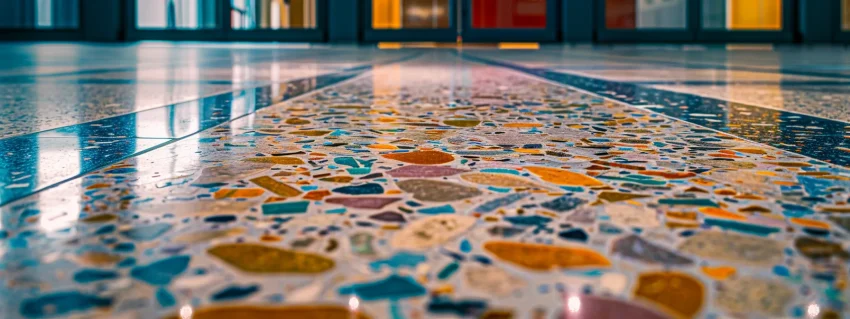
Terrazzo flooring is a composite material that combines chips of marble, quartz, granite, or glass to create a distinctive and versatile surface. This material is particularly favored in modern interior design due to its adaptability in creating a wide array of visual styles, from minimalist to extravagant. The use of a terrazzo flooring can significantly enhance a room’s visual appeal by introducing intricate patterns and vibrant colors that align perfectly with a designer’s mood board. According to a recent survey, 85% of interior designers prefer terrazzo for its seamless integration into various design themes.
Moreover, terrazzo’s ability to complement other elements like millwork and wainscoting makes it an excellent choice for holistic design schemes. By incorporating terrazzo, designers can create cohesive environments where floors and architectural details work in tandem to elevate the overall aesthetic.
For more insights on the transformative power of interior design materials, consider reading this article from ArchDaily.
The Role of Terrazzo in Sustainable Design
Incorporating sustainable practices in interior design has become an essential aspect of modern architecture. Terrazzo flooring plays a pivotal role in sustainable design due to its composition, which often includes recycled materials. This eco-friendly characteristic not only reduces waste but also helps in lowering the carbon footprint of a building project. Additionally, terrazzo is known for its longevity and low maintenance requirements, which further contribute to its sustainability credentials by reducing the need for frequent replacements.
Furthermore, the use of terrazzo aligns with the principles of BIM (Building Information Modeling), which facilitates the creation of energy-efficient buildings. By utilizing terrazzo, designers can achieve superior R-value ratings, enhancing the thermal resistance of spaces and contributing to energy conservation.
For more on sustainable materials in interior design, refer to this guide from Green Building Advisor.
Creative Terrazzo Applications in Modern Homes
Terrazzo flooring offers endless possibilities for creative applications, making it a favorite among interior designers looking to push the boundaries of conventional home design. One innovative use of terrazzo is in the integration with FF&E (Furniture, Fixtures, and Equipment), where custom terrazzo surfaces are created for countertops, tabletops, and even as decorative wall panels. This versatility allows terrazzo to be a central feature or a complementary element depending on the design objectives.
Additionally, terrazzo can be used to create seamless transitions between indoor and outdoor spaces, such as patios or egress windows, enhancing the home’s cohesion. The material’s durability makes it ideal for high-traffic areas, while its aesthetic appeal ensures that these areas remain visually captivating.
Another innovative application is incorporating terrazzo into plinth blocks, providing a unique base that elevates the room’s design. As a material that can be easily customized, terrazzo allows for endless creativity in modern home applications.
Choosing Terrazzo for Aesthetic and Functionality
When selecting terrazzo flooring for a project, it’s essential to consider both aesthetic goals and functional requirements. Terrazzo’s ability to mimic the look of natural stone while offering superior durability makes it a practical choice for load-bearing walls and high-use areas. In addition, the use of a CAD (Computer-Aided Design) system can aid in visualizing how terrazzo will look within a specific schematic design, ensuring that the final result aligns with the client’s vision.
Moreover, terrazzo’s low maintenance cost and ease of cleaning make it an attractive option for those prioritizing functionality. For instance, a Lutron System can be installed to enhance lighting, highlighting the terrazzo’s intricate patterns and colors, thereby boosting both the functionality and aesthetic appeal of a space.
Conclusion
Terrazzo flooring stands out as a versatile and sustainable choice for modern interior design, offering a blend of aesthetic appeal and durability. Its ability to integrate seamlessly into various design themes and contribute to energy-efficient building practices makes it a valuable asset for any project. Investing in terrazzo flooring not only elevates the visual impact of a space but also enhances its functionality, providing a lasting benefit for any home improvement endeavor.