
You bring home that big and comfy couch that you saw online and fell in love with, only to find out that now your living room seems small and awkward. Sound familiar?
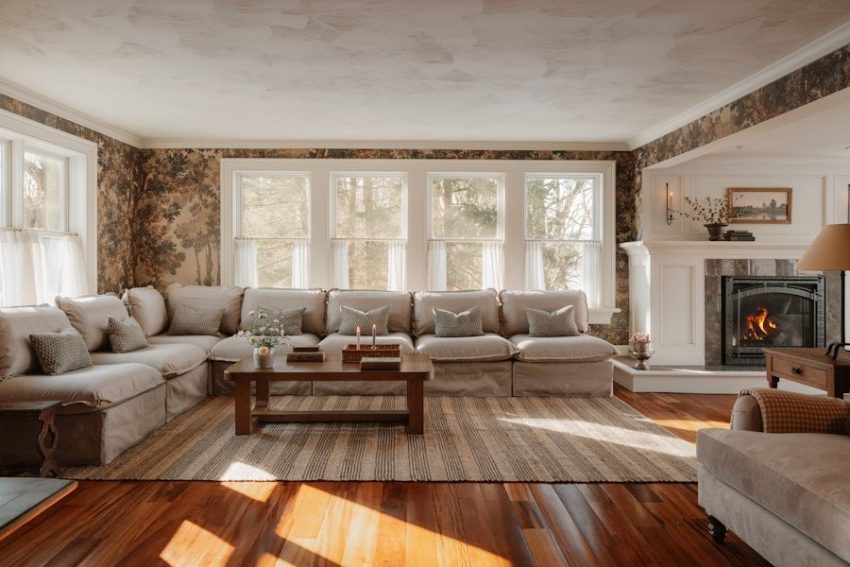
Sectionals are incredible for movie nights and family gatherings, but decorating around them is trickier than it looks. Because of their size, a small styling error can easily throw off your entire space. The good news is that most room layout problems are simple to fix once you spot what is going wrong.
Here are the biggest sectional sofa styling mistakes homeowners make and how to avoid them.
Buying the Wrong Size or Layout for the Room
The most common mistake occurs before the furniture even comes into your house. The selection process of choosing a couch depends on the comfort level that you see when visiting the huge showroom or website, without considering your floor plan.
When shopping for modern sectional sofas, it is easy to focus only on seating capacity and forget about scale. A couch that is too large will crowd your doorways, block natural light from windows, and make your living room feel tight. On the other hand, a sectional that is too small looks lost in an open-concept layout.
How to Fix It:
- Tape the floor: Use blue painter’s tape to mark the exact dimensions of the couch before you buy it, to know how much space you require for the furniture.
- Check walking paths: Leave at least 30 to 36 inches of open walkway around the furniture so people can walk comfortably without bumping into corners.
- Mind the chaise direction: Double-check whether your room calls for a left-facing or right-facing setup so you do not block main entryways.
-
Using an Area Rug That Is Way Too Small
A tiny rug under a big couch is a design mismatch many people fall for. Interior designers call this the floating island or postage stamp effect. When only the coffee table sits on a small rug while the sectional sits completely off it, the room feels disjointed and visually smaller than it really is.
Your rug serves as an anchor. It pulls all the separate furniture pieces together into one cozy conversation area.
How to Fix It:
- The front-legs rule: Make sure at least the front legs of every section of the sofa rest on top of the rug.
- Go big on size: For most standard living rooms, an 8×10 or 9×12 rug works best. Brands like Ruggable or Safavieh offer great, large-format options that stand up well to everyday foot traffic.
- Leave a border: Keep about 12 to 18 inches of bare floor visible between the edge of the rug and the room’s walls.
Pushing the Entire Sofa Flat Against the Walls
When space feels tight, the instinct is to push every piece of furniture against the perimeter of the room. While this seems like a smart way to clear floor space, shoving a large sectional flat against two walls actually makes a living room look stiff, formal, and surprisingly smaller.
Giving your furniture a little room to breathe creates depth and makes the space feel more open and relaxed.
How to Fix It:
- Float the couch: Pull the sofa just 3 to 6 inches away from the wall. That tiny gap creates shadows and visual depth that instantly open up the room.
- Divide open layouts: If you have an open floor plan, use the back of the sectional as a natural room divider to separate your living area from the dining table or home office.
- Add a console table: Place a slim console table behind the exposed back of the sofa. Top it with a lamp, a couple of books, or a small plant to hide the plain back panel.
Keeping Only the Matching Throw Pillows
Most sectionals come with two or four matching accent pillows made from the exact same fabric as the couch. Leaving only those original pillows on the sofa makes the entire setup look flat and straight out of a store catalog.
A large couch has a lot of surface area. If everything is the exact same texture and color, the sofa ends up looking like a massive, featureless blob in the middle of your room.
How to Fix It:
- Mix up textures: Pair smooth fabric with chunky knit throws, velvet covers, or faux-leather accents.
- Layer sizes: Start with larger 22-inch pillows in the corners, then layer 20-inch or lumbar pillows in front.
- Vary patterns and tones: Pick a color scheme of two or three shades that complement your room. You can easily find affordable, stylish pillow covers at stores like Target or IKEA to swap out seasonally.
Leaving the Ends Stranded Without Tables or Lighting
Imagine sitting at the far end of a long sectional with a cold drink or a book, only to realize there is nowhere to set your cup down and no light to read by. A sectional should be functional for every person sitting on it, not just the person in the middle near the main coffee table.
When side tables and lighting are missing from the ends of the couch, the layout feels incomplete and impractical.
How to Fix It:
- Add end tables: Place a small side table or C-table (a table that slides over the arm of the couch) at both ends of the sectional.
- Use an arc floor lamp: A tall, curved floor lamp, like those popular styles from Crate & Barrel or West Elm, can reach over the corner wedge to light up the middle seat without taking up floor space.
- Try drink perches: If space is tight on one side, look for slim drink tables that take up less than 10 inches of floor space.
Pairing it with the Wrong Coffee Table
Matching a sectional with a rectangular table leads to uncomfortable angles when reaching across the table and narrow pathways when trying to get through the space. With a sectional sofa forming an enclosure, any sharp table can create problems when trying to enter or exit that area.
How to Fix It:
- Choose round or oval shapes: A round or oval coffee table softens the hard angles of the sofa and makes moving around the space much smoother.
- Consider an ottoman: A leather or upholstered ottoman serves as both a soft footrest and a coffee table when you place a sturdy wooden tray on top.
- Try nesting tables: Nesting tables give you flexibility. You can pull them apart when hosting guests and tuck them away when you need extra floor space.
Conclusion
Styling a sectional sofa does not require a complete living room remodel or an interior design degree. Just a quick look at your current living room setup, and fixing the mistakes you see.