
Table Of Contents
- Why Room Conditions Matter
- Key LVP Features To Compare
- Living Room Flooring
- Kitchen Flooring
- Bathroom Flooring
- Bedroom Flooring
- Basement Flooring
- Homes With Pets And Children
- Installation And Subfloor Checks
- Cleaning And Long-Term Care
- Common Buying Mistakes
Luxury vinyl plank, often called LVP, can be a practical option for homeowners who want the look of wood with easier everyday care. The best choice depends on more than color, however. Foot traffic, moisture, pets, sunlight, subfloor condition, and cleaning habits all affect how a floor performs. Homeowners comparing Denver Vinyl Flooring options can make a more confident decision by evaluating each room separately before selecting a style.
A single plank may work beautifully in one area and be a poor fit in another. A busy kitchen needs spill resistance and dependable wear protection, while a bedroom may place greater value on comfort and sound reduction. Looking at real room conditions first helps narrow the choices before comparing finishes and patterns.
Why Room Conditions Matter
Every room puts different demands on flooring. Entryways and kitchens experience grit, spills, and repeated traffic. Bathrooms face humidity and splashes. Basements may have concrete moisture concerns. Bedrooms generally see lighter use but may benefit from a quieter, warmer feel. Product construction and installation method should match those demands, not simply the sample that looks best under showroom lighting. A vinyl flooring buying guide can also help shoppers compare product types and installation approaches.
Key LVP Features To Compare
Wear Layer And Total Thickness
The wear layer protects the printed design from daily scuffs, stains, and scratches. A stronger wear layer is often worthwhile in active rooms. Total plank thickness is different. It can influence the underfoot feel, sound, stability, and how well the floor disguises minor subfloor variation.
Core Construction And Surface Finish
Rigid-core options commonly include SPC and WPC. SPC often feels firmer, while WPC can provide more cushion and sound absorption. Neither is automatically right for every home. Also compare matte, smooth, embossed, and textured surfaces. Low-sheen, mid-tone finishes often conceal small marks better, while heavily textured planks can require more detailed cleaning.
Water Claims
Water-resistant and waterproof labels deserve a close read. The plank itself may resist water, but seams, edges, standing water, and subfloor conditions still matter. Review the manufacturer’s rules for the specific room and installation system.
Choosing Flooring For The Living Room
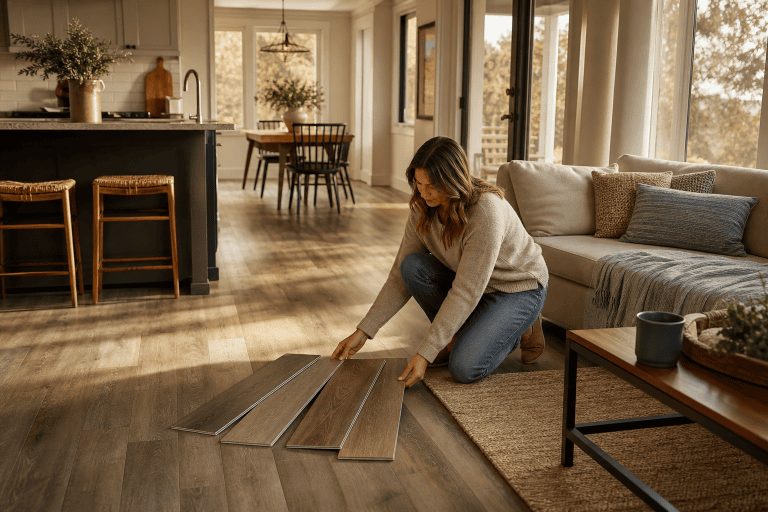
Living rooms need a balance of appearance, comfort, durability, and noise control. Bring home samples and view them beside furniture, rugs, wall paint, and windows at several times of day. A pale, deeply textured plank can look striking in a bright display but may show dirt in a busy family space. Mid-tone colors with modest variation are often more forgiving. If the room is above another living area, compatible underlayment may improve sound control.
Choosing Flooring For The Kitchen
Kitchens must handle food spills, chair movement, dropped dishes, grease, and frequent cleaning. Start by measuring the main walking routes, then check floor height near cabinets, dishwashers, and appliances. Confirm that the subfloor is clean, dry, and level, and plan transitions to adjacent tile, carpet, or hardwood. Wider planks can create a calm, open appearance, while narrower boards may suit a compact kitchen with numerous doorways and cabinet breaks.
Choosing Flooring For The Bathroom
Bathroom flooring should be approved for wet-area use and installed exactly as directed. Pay close attention around the toilet, tub, vanity, seams, perimeter edges, and transition pieces. Choose a finish with reasonable traction when damp, and fix recurring leaks before installation. New flooring cannot solve a plumbing problem, poor ventilation, or a wet subfloor.
Choosing Flooring For Bedrooms
Bedrooms usually allow more freedom to prioritize visual calm and comfort. Warm oak, maple, and neutral brown tones can create a relaxed setting, while low-contrast patterns may make a smaller room feel less busy. Area rugs add softness without covering the whole floor. Running planks along the longest wall or toward a window often creates clean visual flow, although the final layout should also account for the subfloor and room shape.
Choosing Flooring For Basements
Below-grade spaces require a closer look at moisture, concrete, temperature changes, and floor flatness. Before choosing LVP, inspect for damp spots, visible water entry, musty odors, cracks, and uneven areas. Follow the flooring manufacturer’s moisture-testing requirements and use only products approved for basement conditions. Waterproof planks do not make a basement waterproof. Drainage, grading, dehumidification, and foundation repairs remain important.
Best Options For Homes With Pets And Children
Homes with pets and children benefit from a durable wear layer, easy-clean surface, practical color variation, and clear residential warranty terms. No product is completely scratch-proof or damage-proof. Reduce wear with entry mats, soft furniture pads, prompt spill cleanup, and regular pet nail trimming. A texture that provides grip without collecting excessive debris is often a sensible compromise.
Installation And Subfloor Checks
Installation quality affects the floor’s appearance and service life. Read the instructions before starting, acclimate material if required, remove debris, correct uneven areas, and plan the first and last rows before cutting. Leave the required expansion space and install transitions correctly. Click-lock, glue-down, and loose-lay products each have different preparation requirements, so do not assume one method’s rules apply to another.
Cleaning And Long-Term Care
Sweep or vacuum regularly to remove abrasive grit, clean spills promptly, and use a damp mop rather than flooding the floor. Follow the approved cleaner list, and avoid harsh solvents, abrasive pads, or steam cleaners unless specifically allowed. During installation, ventilation also matters. The U.S. Environmental Protection Agency’s indoor air quality guidance notes that newly installed flooring and other building materials can contribute to indoor pollutants.
Common Buying Mistakes
- Choosing color alone without considering room traffic, light, and moisture.
- Confusing total plank thickness with wear-layer durability.
- Skipping subfloor preparation or transition planning.
- Assuming waterproof means safe from flooding or long-standing water.
- Using cleaners that leave residue or damage the finish.
- Ordering too little material for cuts, waste, and future repairs.
Before buying, confirm room approval, cleaning requirements, required subfloor conditions, warranty coverage, and the likelihood that matching replacement planks will remain available.
A Simple Way To Make The Final Choice
Start with the room’s conditions, add household habits, compare product specifications, and verify installation needs. Then choose the color and pattern that suits the space. The best luxury vinyl plank flooring is not necessarily the thickest, widest, darkest, or most expensive option. It is the one that fits the room, subfloor, maintenance routine, and everyday life.