
Key Takeaways
- Amocat Fencing serves Tacoma, Pierce County, and nearby South Sound communities with residential and commercial fence installation.
- The right fence depends on privacy, security, appearance, maintenance expectations, budget, terrain, and site access.
- Wood privacy, vinyl, chain link, metal, composite, and custom fence systems each solve different property needs.
- Pacific Northwest rain, shade, wind, and soil conditions should be considered before selecting materials and planning installation.
- Property owners should confirm fence height, setbacks, property lines, easements, and any applicable permit requirements before construction.
Choosing a fence is about more than creating a boundary. A well-planned fence can improve backyard privacy, contain pets, manage access, protect commercial property, and give a property a more finished appearance. Property owners looking for a dependable fence contractor Pierce County can work with Amocat Fencing for practical guidance, material options, and installation services built around the needs of Tacoma-area homes and businesses.
Amocat Fencing is an owner-led Tacoma-area contractor serving Pierce County and surrounding communities. With more than 12 years of hands-on experience, the company installs residential and commercial cedar, vinyl, chain link, metal, composite, and custom fencing. The goal is not to push one material for every site, but to help customers choose a fence that fits its purpose, budget, and long-term upkeep expectations.
Why Pacific Northwest Conditions Matter for Fence Planning
Fences in Pierce County are exposed to regular rain, damp soil, seasonal wind, shade, and changing temperatures. Those conditions can affect post stability, drainage, fasteners, finishes, and the appearance of exposed materials over time. A site review should consider slope, standing water, tree cover, soil conditions, gate locations, and whether an existing fence must be removed before a new one is built.
Moisture and Wood Fence Maintenance
Wood remains a popular choice because it offers natural character, strong privacy, and flexible design options. However, outdoor wood benefits from thoughtful installation, ventilation, drainage, and ongoing care. The USDA Forest Products Laboratory provides guidance on the relationship between wood, moisture, dimensional change, and finishing, and is an important reason to plan for staining and maintenance rather than treating a cedar fence as maintenance-free. Amocat Fencing uses premium red cedar for its wood fence projects and can discuss pre-staining and post-on-pipe options for customers who want a durable privacy system.
How to Compare Fence Materials
The best fence material depends on what the property needs to accomplish. Privacy may be the top priority for one homeowner, while visibility, security, pet containment, or low maintenance may matter more for another. Amocat Fencing helps customers weigh the trade-offs before installation begins.
- Cedar wood: A strong fit for privacy, natural appearance, and custom designs. Cedar can be adapted to many styles, but staining and routine care should be part of the ownership plan.
- Vinyl: A practical option for clean, consistent privacy fencing with limited routine upkeep. It works well for homeowners who prefer a polished look without periodic staining.
- Chain link: A dependable choice for dog runs, side yards, affordable enclosures, commercial perimeters, and security applications where visibility is useful.
- Metal: Ornamental iron, aluminum, steel, and corrugated metal can support security goals, defined entrances, durable boundaries, and distinctive curb appeal.
- Composite: A modern option for customers who want a wood-look finish with lower upkeep and weather-resistant performance.
Residential Fencing for Privacy, Pets, and Curb Appeal
For many homeowners, a new fence creates a more usable outdoor space. Cedar privacy fencing is Amocat Fencing’s most popular residential option because it can screen neighboring views while maintaining a natural Pacific Northwest look. Vinyl may better suit a low-maintenance preference, while chain link can be an efficient solution for pets and practical enclosure. Metal and composite systems can be appropriate when a homeowner prioritizes a particular architectural style or reduced upkeep.
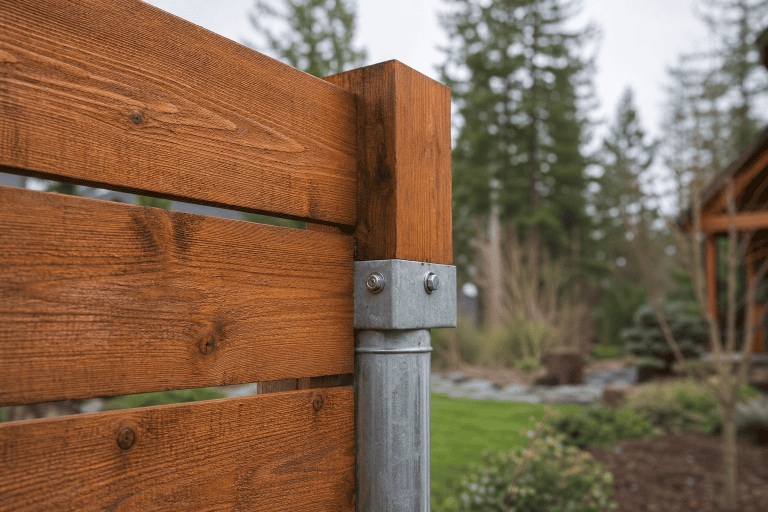
Residential projects can also include more than fence panels and gates. Custom cedar features such as arbors, trellises, planters, and decorative elements can help define a garden, entrance, patio, or backyard gathering area. The right design should account for grades, gates, foot traffic, utility access, and how the fence will connect with the home and landscape.
Commercial, HOA, and Property Management Fence Solutions
Commercial properties often need a fence that does more than mark a lot line. Businesses, HOAs, and property managers may need controlled access, dumpster enclosures, parking-area separation, equipment screening, dog areas, or secure perimeter fencing. Chain link, steel, aluminum, corrugated metal, and custom gate solutions can be considered based on the site’s security requirements and desired visibility.
A practical commercial plan starts by reviewing entry points, vehicle access, pedestrian traffic, maintenance needs, and the role of gates. Amocat Fencing can help determine whether the project calls for a straightforward boundary fence, a security-focused system, or custom carpentry that improves the function and appearance of the property.
What to Expect From the Installation Process
Clear communication is essential before posts are set. An Amocat Fencing estimate conversation can cover the property’s goals, linear footage, terrain, preferred material, gate locations, removal of an existing fence, access limitations, and any custom features. Customers receive a free, no-obligation estimate and can ask about material trade-offs, projected scheduling, warranty coverage, and financing options when appropriate.
Once a project is approved, installation timing can vary with material availability, weather, site access, demand, permits, and project complexity. Most residential installations take approximately two to five days after work begins, although longer fence runs, difficult terrain, commercial access needs, custom carpentry, and removal work can change that timeline.
Fence Permits and Local Planning in Pierce County
Fence requirements can vary by property and location, so planning should begin before materials are ordered. Pierce County notes that fences greater than six feet high require a building permit and must meet setbacks. Height is measured from the top of the fence to the ground immediately beside it. Other rules may apply, particularly near road intersections, easements, critical areas, or commercial sites.
Property owners should verify property lines, review utility and road easements, check sight-distance concerns, and confirm local requirements with the appropriate jurisdiction. An estimate visit is also a good time to raise questions about gates, fence height, drainage, and site conditions. This is general planning information, not legal or permitting advice.
Warranty and Long-Term Fence Care
Amocat Fencing lists an 18-month standard warranty for labor and materials. Its post-on-pipe, pre-stained cedar program includes a three-year warranty that resets when the customer schedules a qualifying restaining service. Customers should review written terms carefully and ask which materials, labor, maintenance services, and conditions are covered.
Every fence benefits from regular attention. Wood may need cleaning, staining, and occasional repairs. Gates should be checked for alignment, drainage should move water away from posts where possible, and damaged components should be addressed before a small issue affects a larger section of the fence.
Request a Fence Estimate in Tacoma and Pierce County
Amocat Fencing serves Tacoma, Puyallup, Auburn, Federal Way, Lakewood, South Hill, Sumner, and nearby communities. To start, share the property location, whether the project is residential or commercial, the main objective, preferred materials, and any known concerns such as pet containment, existing fence removal, gates, slopes, or difficult access.
A successful fence project begins with a clear scope, the right material, and an installer who understands the property. Amocat Fencing gives Pierce County property owners a direct path to compare fencing options, plan for local conditions, and build a durable fence suited to the way the property is used.