
Key Takeaways
- Soft washing uses low-pressure rinsing and appropriate cleaning solutions to address organic buildup on delicate surfaces.
- Pressure washing is generally better suited to durable, flat materials such as concrete walkways and driveways.
- High pressure can damage paint, wood, mortar, shingles, screens, and siding when used incorrectly.
- Preparation, plant protection, and runoff control are important parts of any exterior cleaning project.
Charleston homes face a combination of coastal moisture, warm weather, shade from mature trees, pollen, and windblown debris. Those conditions can leave siding, trim, masonry, and walkways looking dirty faster than many homeowners expect. Choosing the right approach to exterior house washing is less about using the strongest equipment and more about protecting the material being cleaned.
Soft washing and pressure washing both have a place in routine exterior maintenance. The safer choice depends on the surface, its age and condition, the type of staining present, and whether there are cracks, loose paint, failing caulk, or other areas where water could cause trouble.
Why the Method Matters
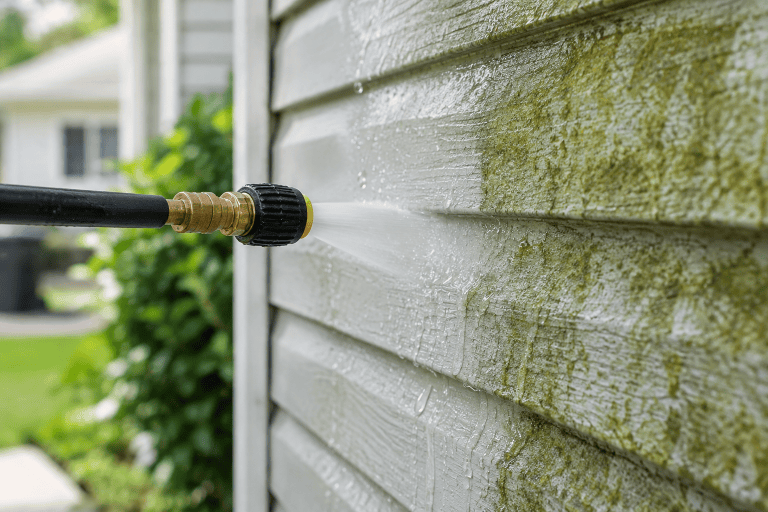
Water force alone does not determine whether a surface will come clean safely. A shaded vinyl wall with green growth may need a surface-appropriate treatment and gentle rinse, while a concrete driveway may respond well to controlled pressure. Good cleaning protects finishes and prevents water from being driven behind siding, around windows, or into damaged joints.
For Charleston properties with multiple exterior materials, exterior house cleaning should begin with an inspection rather than applying a single treatment everywhere. Check for peeling paint, loose panels, cracked stucco, soft mortar, open caulk lines, and areas with poor drainage before starting.
What Soft Washing Does
Soft washing generally combines low-pressure application and rinsing with a cleaner selected for the surface and the buildup being addressed. It can be useful for algae, mildew, pollen, dust, and grime on siding, painted trim, stucco, and similar materials that may be damaged by high water pressure.
The cleaning solution does much of the work, so pressure does not have to be applied. Always follow the product label, use only products intended for the material, and test a small hidden area first. Never mix bleach with ammonia or other incompatible cleaning products.
Where Pressure Washing Works Best
Pressure washing can be effective on sturdy surfaces that can withstand high water pressure, including many concrete driveways, sidewalks, and patios. Even on durable flatwork, the wand should remain in motion and at an appropriate distance. Holding a concentrated stream in one place can create uneven marks or damage the surface.
A surface-cleaner attachment can help produce more consistent results across broad concrete areas. It does not eliminate the need for care, especially near expansion joints, older repairs, decorative finishes, or loose material.
Choosing by Surface Type
- Vinyl siding: Start with soft washing or gentle rinsing. Directing water upward can force it behind panels.
- Painted wood: Use low pressure and mild cleaning methods. Strong pressure can strip paint and roughen wood fibers.
- Stucco: Favor low-pressure cleaning. Cracks and damaged areas can allow water intrusion.
- Asphalt shingles: Avoid high-pressure washing. Strong spray can dislodge protective granules and disturb shingles.
- Concrete: Controlled pressure washing is often appropriate, but uneven passes can leave visible striping.
- Brick and masonry: Consider the age and condition first. Older mortar or deteriorated joints may not tolerate aggressive cleaning.
Moisture management matters as much as surface appearance. The EPA notes that controlling moisture, promptly cleaning affected areas, and correcting water problems are central to limiting mold growth, particularly where damp conditions persist.
Common Risks of Excessive Pressure
Using too much pressure, standing too close, or aiming water in the wrong direction can create avoidable repair issues. Common problems include peeled paint, scarred wood, damaged screens, loose caulk, chipped stucco, worn mortar, and water pushed behind siding. Roofs, soffits, vents, and window seals warrant particular caution because hidden water intrusion may not be immediately apparent.
A Safer Exterior Cleaning Process
- Identify each surface and inspect it for damage before cleaning.
- Move furniture, planters, decorations, and electrical items away from the work area.
- Pre-rinse nearby plants and keep pets indoors until surfaces are thoroughly rinsed and dry.
- Test the cleaner-and-rinse method on a small, inconspicuous section.
- Apply cleaning products according to their labels and allow the recommended dwell time.
- Rinse with controlled pressure, generally working from top to bottom.
- Inspect the area afterward for missed buildup, damaged finishes, or standing water.
Wear eye protection, gloves, slip-resistant footwear, and clothing suitable for chemical splashes. Avoid working from ladders while operating a pressure washer, as recoil, wet rungs, and awkward hose placement can increase the risk of falls.
When to Clean Around Charleston
Spring is a practical time to remove pollen and winter grime. Summer often calls for attention to shaded, damp sections where organic buildup can return. Fall cleaning can help clear leaf debris and keep gutters, downspouts, and drainage paths functioning before wetter weather arrives. Charleston-area local climate records also provide useful context when planning around rainfall, heat, and seasonal conditions.
A mild, calm day is usually easier to manage than a hot, windy afternoon. Strong sun can dry some cleaning solutions too quickly, while rain may dilute products or make it harder to judge the finished result.
DIY or Extra Help?
DIY may be reasonable when:
- The area is small, low to the ground, and easy to access.
- The material is in good condition, and the cleaning product is clearly labeled for it.
- There are no roof, ladder, electrical, or drainage concerns.
Extra help may be wiser when:
- Upper walls, roof areas, or multiple delicate materials need attention.
- There is widespread staining, persistent organic growth, or evidence of surface damage.
- The job requires ladders, specialized equipment, or careful runoff management.
Final Takeaway
For Charleston homeowners, safer exterior care starts with matching the method to the material. Soft washing can be the better choice for delicate surfaces and organic buildup, while pressure washing can be useful for durable concrete and similar flatwork. Inspect first, use measured pressure, protect surrounding areas, and address small problems before they become larger maintenance concerns.