
Key Takeaways
- The right surface should suit daily routines, cleaning preferences, and the room’s conditions.
- Kitchens, bathrooms, and outdoor spaces each place different demands on stone and engineered surfaces.
- Finish, slab layout, seams, edge details, and lighting can matter as much as the material itself.
- Careful measurement and fabrication planning help avoid surprises during installation.
For Lake County, Illinois homeowners, a new countertop or stone feature needs to do more than look good in a showroom. It should stand up to weekday cooking, busy family bathrooms, entertaining, and the changing conditions that affect outdoor living. Working with Stonecrafters countertops in Lake County can help turn those practical considerations into a surface plan that fits the way a home is actually used. Start with the room, the household, and the expected upkeep before narrowing the color palette. A dramatic slab may be the right choice for a quiet powder room, while a heavily used kitchen island may call for a surface and finish that make daily cleanup feel simple.
Start With Daily Life, Not a Color Sample
A small sample cannot show every variation in a full slab or how a surface will look beside cabinets, flooring, and windows. Consider how often the room is used, whether children or pets are part of the routine, how quickly spills are cleaned up, and whether the household maintains it regularly. Also think about direct sun, nearby heat, and whether a consistent pattern or natural movement better suits the space.
Compare Common Surface Materials
Natural stone is selected, cut, shaped, and finished for architectural use. The process behind dimension stone helps explain why slab character, thickness, edge treatment, and fabrication details deserve a close review before an order is finalized.
- Granite: Known for natural pattern variation and a broad range of colors. It is commonly used for countertops, vanities, and some exterior applications when the specific stone and installation are appropriate.
- Marble: Prized for distinctive veining and a classic look. It can be a strong design choice for vanities, fireplace surrounds, and lower-impact areas when the owner is willing to accept its care needs.
- Quartzite: A natural stone valued for its movement and mineral character. Individual slabs vary, so viewing the actual material matters.
- Quartz: An engineered surface that offers more uniform color and pattern options. Product-specific guidance should determine where it is installed and how it is maintained.
- Porcelain or sintered surfaces: Available in large-format panels and stone-inspired designs. Confirm fabrication requirements, thickness, edge options, and exterior suitability for the selected product.
Choose Surfaces for Kitchens
Kitchens ask a lot from one surface. Counters may handle food preparation, dishes, small appliances, schoolwork, serving platters, and frequent wiping in the same day. Review the areas around sinks and cooktops, as well as island overhangs, backsplash transitions, and seam visibility.
Questions to Ask Before Choosing
- Will hot cookware, acidic foods, or colorful spills be common?
- Is a bold island slab the focal point, or should the counter act as a quiet backdrop?
- Are visible seams acceptable in the chosen layout?
- Will bar seating require additional support beneath an overhang?
Current style ideas can be useful, but they should not replace performance planning. Recent countertop and surface trends include warm neutrals, textured finishes, and stone-inspired patterns, all of which can be adapted to a timeless Lake County kitchen.
Choose Surfaces for Bathrooms
Vanity tops, shower walls, tub surrounds, floors, and backsplashes are regularly exposed to moisture and personal-care products. Select finishes with cleaning in mind, especially in shower areas where soap residue can collect. Plan sink and faucet cutouts carefully, place seams where they are less noticeable, and ask whether sealing or other periodic care is recommended for the chosen material.
Plan for Outdoor Conditions
An outdoor kitchen, fireplace surround, or bar top is exposed to sunlight, rain, dirt, temperature fluctuations, and seasonal use. Indoor materials are not automatically appropriate for outdoor use. Before selecting a surface, confirm that the specific product is approved for exterior use and that the base structure can safely support its weight.
- Review exterior suitability and warranty information.
- Choose a finish that makes sense for moisture and cleaning.
- Plan drainage, overhangs, and grill clearances.
- Discuss how covers or seasonal protection fit the design.
Match Finish, Color, and Veining
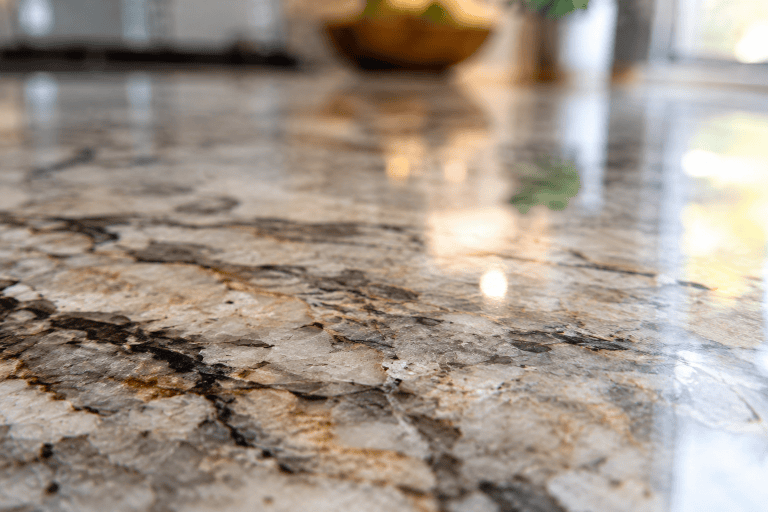
Polished surfaces reflect more light, while honed, leathered, brushed, and textured finishes can create a softer or more tactile appearance. Finishes may also change how fingerprints, water marks, texture, and color are perceived. Review full-size samples in morning, afternoon, and evening light, then consider cabinet color, wall paint, backsplash material, edge profile, and the direction of veining across seams.
Review Installation Details
Precise fabrication begins after final measurements, not before. Ask who will template the space, how slab layout approval works, where cutouts and seams will fall, and what supports are needed for overhangs. Delivery access matters too, particularly in older homes with tight turns, stairs, or uneven walls. Protect finished surfaces while the rest of the renovation is completed.
Build a Simple Care Plan
Care instructions should match the specific material and finish. Request written guidance before installation, use approved cleaners, wipe spills promptly, and use cutting boards or trivets when recommended. Avoid assuming that every stone or engineered surface responds the same way to heat, acids, abrasives, or strong chemicals.
Avoid Common Selection Mistakes
- Choosing from a small sample without viewing the full slab.
- Ignoring lighting changes throughout the day.
- Failing to discuss seam placement, vein direction, and edge details.
- Using an interior product in an exposed exterior setting.
- Forgetting to budget for cutouts, supports, delivery, and installation.
- Waiting until after installation to ask about cleaning and care.
Make the Final Choice With Confidence
The best stone surface for a Lake County home balances visual impact with everyday usefulness. Compare full slabs, evaluate samples in real lighting, ask detailed questions about fabrication and installation, and choose a material that fits the household’s comfort level with care. A thoughtful decision can keep a kitchen, bath, or outdoor gathering space functional and appealing long after a passing trend fades.
Conclusion
Choosing the right stone surface for a Lake County home involves balancing appearance, durability, maintenance, and the practical demands of each space. Homeowners should consider how their kitchens, bathrooms, and outdoor areas are used before settling on a material, finish, or color. Reviewing full slabs, comparing samples under different lighting conditions, and discussing seams, edge profiles, measurements, and installation requirements can also help prevent unexpected issues during a renovation. Just as importantly, understanding the recommended cleaning and care routine can help preserve the surface over time. With careful planning and guidance from an experienced countertop professional, homeowners can select stone and engineered surfaces that complement their homes while supporting everyday activities for years to come.