
Key Takeaways
- Find and remove the source of the smoke odor instead of masking it with fragrances.
- Smoke residue can remain on walls, ceilings, furniture, fabrics, and ventilation areas.
- Inspect each room carefully, including hidden and enclosed spaces.
- Clean hard surfaces, washable fabrics, carpets, and upholstery appropriately.
- Replace dirty or smoke-affected HVAC and air-purifier filters.
- Use air filtration to support cleanup, but not as a replacement for surface cleaning.
- Avoid mixing cleaning chemicals or using ozone devices without understanding the risks.
- Monitor cleaned areas because smoke odors can return with heat, humidity, or air movement.
- Seek professional help when smoke affects HVAC systems, hidden spaces, or extensive porous materials.
- Prioritize health and safety when smoke exposure causes breathing discomfort or other concerns.
A smoke smell can linger long after a small kitchen fire, cigarette exposure, a nearby wildfire event, or a larger property loss. In Baton Rouge, Louisiana, warm, humid conditions can make an old odor seem stronger again after it appeared to have faded. Effective smoke odor removal in Baton Rouge starts by locating the residue, not simply adding fragrance to the room. Smoke is made up of tiny particles and gases that can settle on many materials. A room may look clean while odor-causing residue remains on walls, upholstery, ceilings, and in ventilation areas. The best approach is patient, room-by-room cleaning paired with safe air filtration.
Why Does Smoke Smell Return After Cleaning
Wiping one countertop or shampooing one rug rarely solves the entire problem. Smoke can settle on both smooth and porous surfaces, then re-enter the air over time. Research on smoke compounds that persist on indoor surfaces found that surface cleaning can reduce these lingering reservoirs more effectively than ventilation alone. Heat, humidity, and normal air movement can make an old odor noticeable again. This is why a home may smell better right after cleaning, then develop a smoky odor when the air conditioner starts or when a closed room warms up. Air fresheners may mask the smell briefly, but they do not remove the residue they leave behind. When smoke has affected several rooms, hidden materials, or HVAC equipment, a more complete plan may be needed. Homeowners dealing with a larger loss can consider professional fire damage restoration in Prairieville to address affected building materials and belongings.
Where Smoke Odor Hides Indoors
Odor often remains in places that are easy to miss during everyday cleaning. Inspect these areas before deciding the problem is gone:
- Carpets, area rugs, and carpet padding
- Upholstered furniture, mattresses, and fabric headboards
- Curtains, pillows, blankets, and lampshades
- Painted walls, ceilings, trim, and doors
- Cabinet interiors, shelves, and pantry surfaces
- Return grilles, supply vents, and HVAC filters
- Attics, garages, crawl spaces, and unfinished storage areas
- Clothing, books, toys, paper files, and stored belongings
A Room-by-Room Inspection Plan
Living Room
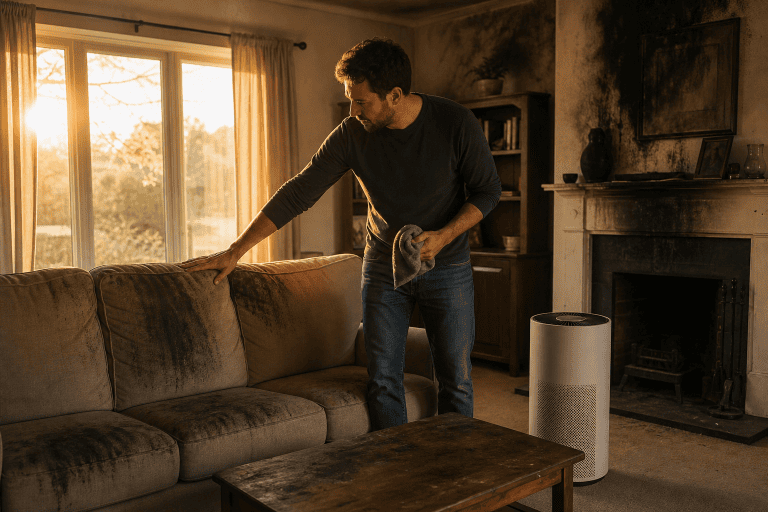
Check sofas, recliners, curtains, rugs, and decorative fabrics. Move large furniture away from walls and inspect behind it for gray or brown residue. Wipe a small hidden area with a clean white cloth to see whether residue transfers.
Kitchen
Look closely at the range hood, cabinet tops, backsplashes, and walls near the cooking area. Grease can hold onto smoke odor, so degreasing may be an important first step. Check the hood filter and nearby vents if the smell grows stronger during cooking or when the HVAC system runs.
Bedrooms and Utility Areas
Wash bedding and removable curtains according to their care labels. Inspect closets, mattresses, soft storage bins, laundry rooms, garages, and duct openings. Rooms with limited airflow may require extra attention because odors can become trapped in fabrics and enclosed spaces.
Safe Cleaning Steps That Make a Difference
- Ventilate only when the outdoor air is clean. Open windows or use exhaust fans when outside conditions will not bring more smoke or humidity indoors.
- Remove loose residue carefully. Use a vacuum with strong filtration on appropriate floors and upholstery. Avoid dry vacuuming heavy soot with a standard household vacuum.
- Clean hard surfaces from top to bottom. Start with ceilings, walls, trim, cabinets, and floors. Use a cleaner suited to the material and test it in an inconspicuous area first.
- Launder washable fabrics. Wash bedding, curtains, clothing, and removable covers as directed by the manufacturer.
- Replace dirty filters. A filter that smells smoky or looks loaded with dust can keep circulating odor and particles.
- Dry items completely. Moisture can create a separate musty smell and complicate cleanup.
- Check again later. Close the cleaned room for several hours, then return to see if the odor has returned.
Never mix cleaning chemicals, especially products containing bleach, ammonia, acids, or solvents. Wear gloves and eye protection when using cleaning products, and avoid relying on strong scents as a substitute for removing smoke residue.
How Air Filtration Supports Cleaner Indoor Air
Air cleaning can support cleanup, but it does not replace washing affected surfaces. Portable air cleaners can help reduce airborne particles in a single room, while a compatible HVAC filter can help treat air moving through a central system. For smoke events, the EPA advises using mechanical filters and notes that some electronic cleaners may produce ozone, which is not recommended for smoke removal. Its guidance on indoor air filtration during smoke events also recommends leaving open space around an air cleaner to allow air to move freely. Particle filters capture particles, while activated carbon media can help with some odor-causing gases. Choose equipment sized for the room, follow the manufacturer’s filter schedule, and check filters sooner if they become dirty or begin to smell.
Common Smoke Odor Removal Mistakes
- Using air fresheners before cleaning the affected materials
- Cleaning floors but ignoring walls, ceilings, cabinets, and vents
- Running the HVAC system with an overdue filter
- Using too much water on drywall, wood, or upholstery
- Using ozone devices without understanding the risks
- Assuming the issue is resolved because the smell fades for one day
- Throwing away valuable items before checking whether they can be cleaned safely
When Household Cleaning May Not Be Enough
It may be time to seek qualified help if the odor returns after repeated cleaning, smoke enters the HVAC system, or residue is visible on walls, ceilings, insulation, or flooring. Professional assessment is also wise after a significant fire, when porous materials remain strongly affected, or when smoke may have entered wall cavities. If anyone in the home has coughing, headaches, eye irritation, breathing discomfort, or other health concerns, seek medical guidance. Odor removal is not a substitute for medical care or for a professional indoor air assessment when conditions are serious.
Common Questions About Lingering Smoke Smell
How long can the smoke odor remain in a home?
The timeline varies based on the smoke source, the amount of exposure, the materials involved, ventilation, humidity, and the depth of cleaning. Odor may last much longer when it has reached porous materials or hidden spaces.
Does opening windows remove the smell of smoke?
Fresh outdoor air can help when conditions outside are clean, but it cannot remove smoke residue absorbed by walls, fabrics, carpets, or ductwork.
Will baking soda or charcoal solve the problem?
These products may help with mild odors in a small area, but they do not replace source removal, surface cleaning, or filter replacement.
Can smoke odor remain in air vents?
Yes. Filters, grilles, and HVAC components can collect particles and may spread odor when the system operates. Start with the accessible filter and vents, then seek advice before attempting to clean inaccessible ductwork.
Final Takeaway
Lasting smoke odor control begins with finding the source rather than simply covering the smell with fragrances or air fresheners. Clean affected surfaces and materials carefully, inspect hidden areas where smoke residue may remain, improve air movement when it is safe to do so, and replace contaminated HVAC or air-purifier filters as appropriate. Porous materials such as fabrics, carpets, upholstery, drywall, and insulation may require additional attention because odors can remain trapped after visible residue has been removed. It is also helpful to monitor the area after cleaning to determine whether the odor returns or becomes stronger under certain conditions. A careful, step-by-step plan can reduce wasted effort, prevent unnecessary cleaning, and make it easier to identify when ordinary cleaning is not enough. When smoke damage is extensive, involves hidden materials, or continues despite reasonable cleaning efforts, professional assessment may help determine the appropriate next steps.