
Objects such as beads, figures, and cats have been placed outside doors or on shelves to help protect families from harm. The Turkish glass bead, the bull in Peru, and the waving cat in Japan all appear different, but each represents the same desire for a house to prosper. The following eight symbols have been selected to give a diverse selection of objects that show the belief systems of the people who use them.
Good-Luck Talismans from Around the World
These symbols are from West Asia, East Asia, South Asia, the Andes, Europe, and North America. They are used for different reasons. Some of the symbols ward off the evil eye; some of them are meant to bring a good beginning, while others have a traditional or religious background. The hope for good fortune is universal, and today it even shows up online, where adult players look for $75 no deposit bonus codes before trying a new casino. Each entry below explains the symbol’s meaning and origin.
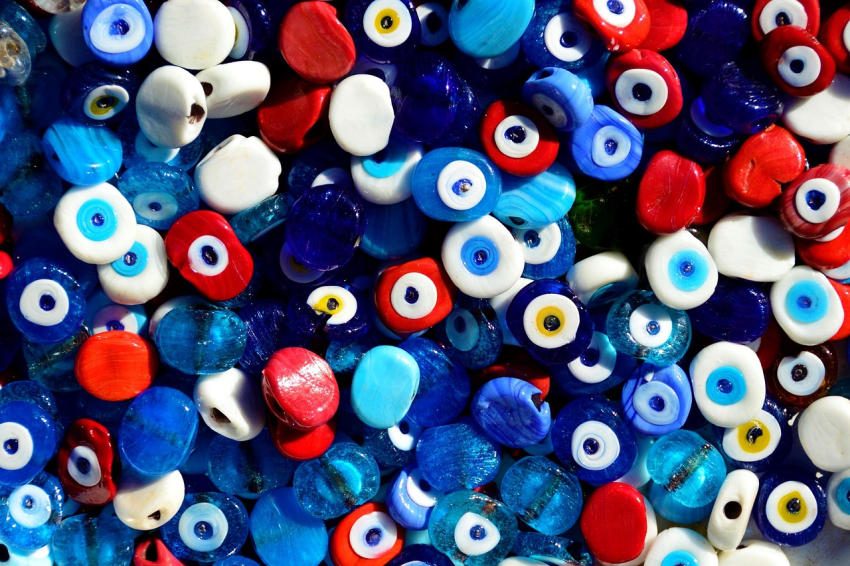
Nazar boncuğu (Turkey)
The nazar boncuğu is a glass bead with blue and white rings that resemble an eye. In Turkey, it guards against the evil eye, the belief that an envious glance can harm children, health, or a good harvest. The belief is linked to ancient Mediterranean and Near Eastern cultures, though the bead’s exact history is unknown.
Hamsa (Middle East and North Africa)
The hamsa is a design of a hand with an eye on its palm, and its name is derived from the Arabic word for five. This sign has various names across different religions:
- Hand of Fatima among many Muslims.
- Hand of Miriam among Sephardi and Mizrahi Jews.
- Hand of Mary among some Christians in the Levant.
The British Museum holds a silver Moroccan hand pendant from around the 1890s that it says may have been worn by Muslims or Jews to ward off the evil eye of envy. Hamsas are also painted on walls and doorways to protect babies and expectant mothers, though scholars have not settled on where the symbol began.
Maneki-neko (Japan)
The maneki-neko or lucky cat, which raises one of its paws as though beckoning a person, is widely seen in stores, restaurants, and even homes. The right paw is believed to attract money while the left paw attracts customers. Several temples, including Gōtoku-ji in Tokyo, claim to be its birthplace through legends, but the earliest firm evidence is an 1852 woodblock print by Hiroshige showing the figures on sale.
Horseshoe (Europe and North America)
A horseshoe nailed to the door is one of the most recognisable items used for protection in Europe and was transported to North America by immigrants. According to English legend, Saint Dunstan, a blacksmith, nailed a horseshoe on the Devil’s hoof and made him promise that he would not enter any house that has a horseshoe. The Shelburne Museum notes that New England homes displayed horseshoes alongside other protective objects, and people still debate whether the ends should point up or down.
Ganesha (India and the Hindu diaspora)
Ganesha, the elephant-headed deity, is not a lucky charm in the everyday sense. Devotees honour him as the Lord of Beginnings and remover of obstacles, and pray to him before any new venture. His images sit in home shrines as an act of devotion. For many Hindus, a Ganesha figure is a sacred image first and a decoration only for those outside the faith.
Toritos de Pucará (Peru)
In Puno’s Andean highlands, a pair of clay bulls often sits on the roof ridge or above the door. According to Peru’s state news agency Andina, they stand for well-being, protection, and strength. The craft comes from Checa Pupuja, while the name Pucará refers to the nearby railway station where the bulls were sold.
Guardian lions (China)
Stone and bronze lions have long guarded East Asian gateways, though lions are not native to China and first arrived as tribute during the Han dynasty. They once stood in pairs beside palaces, temples and mansions. The male rests a paw on a ball while the female protects her cub, a pairing that symbolises yin and yang. Today, smaller and more affordable versions can also be found at the entrances of restaurants, hotels and shops.
Hex signs (Pennsylvania, United States)
The painted stars and rosettes on Pennsylvania Dutch barns date from the early nineteenth century, though the name hex signs caught on only in the 1920s. Scholars still debate whether they were talismans or decoration, and Amish and Mennonite families rarely display them. Today they are popular souvenirs, a sign of how a symbol’s meaning changes on its way from farm to shop.
Why Do People Keep Lucky Symbols at Home?
The same few hopes appear again and again, and objects gather wherever people feel exposed: at the door, on the roof or by a baby’s cot. The table groups the symbols by the wish behind them:
| Hope | Symbol | Where it is kept |
| Protection from envy | Nazar, hamsa | By the door, on walls |
| Protection from harm | Guardian lions, horseshoes | At the entrance, above the door |
| A good start | Ganesha | At the entrance, in a home shrine |
| Prosperity and wellbeing | Peruvian bulls | On the roof |
| Money and customers | Maneki-neko | In shops, homes and restaurants |
| Protection or decoration (debated) | Hex signs | On barn walls |
People do not necessarily believe that these objects can guarantee good fortune. The talisman represents an aspiration and ties together a family within the context of a tradition, particularly amidst the uncertainties surrounding illness, weather, and finances.
Are Good-Luck Talismans Still Popular Today?
Yes, but in a new context: nazar beads are used as ornaments, lucky cats are placed in shops outside of Japan, and guardian lions guard the entrances of restaurants. These items have the following three functions today:
- Religious: the hamsa and Ganesha still hold sacred meaning for believers.
- Traditional: the Peruvian toritos remain a family and community custom.
- Decorative: many hex signs and souvenir lucky cats are mainly ornaments.
Buying a talisman as decoration is fine, but it helps to learn its meaning and buy from makers linked to the tradition. In the end, an object carries only the meaning that people give it.