
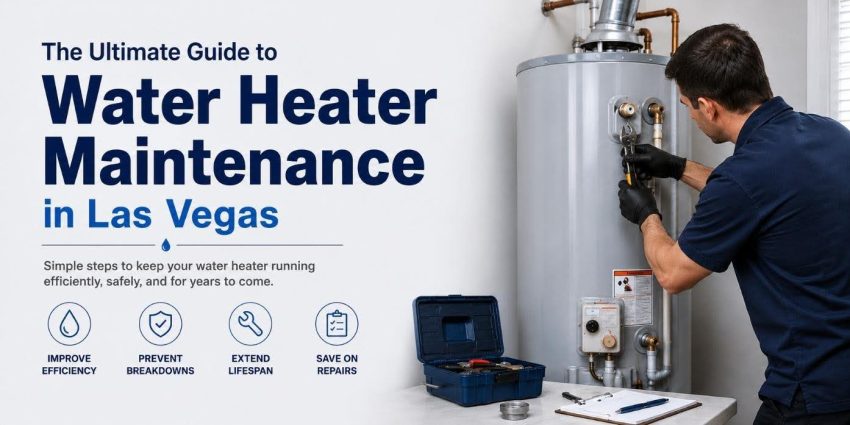
Water heater maintenance in Las Vegas comes down to one habit above all else, which is flushing the tank at least once a year to clear out sediment before it hardens into scale. Do that consistently, and a standard tank unit can run twelve to fifteen years in this city. Skip it, and you’re looking at half that, maybe less.
The reason maintenance matters so much here is simple. Water hardness. The Las Vegas Valley Water District lists local water hardness at roughly 16 to 19 grains per gallon, which puts the valley among the hardest municipal water supplies in the country. All those dissolved minerals settle at the bottom of your tank and bake onto the heating element every time the unit fires up.
Located in southern Nevada, Las Vegas is one of the country’s fastest-growing cities and is known for its desert climate and naturally hard water. Water Heaters Today replaces water heaters in Las Vegas almost every day of the week, and the story behind it is nearly always identical. Nobody flushed the tank, and it quietly gave up years before it should have.
This guide walks through what actual maintenance looks like, how often to do each task, and which warning signs mean you’re past maintenance and into repair-or-replace territory.
Why Las Vegas Water Wears Out Tanks Faster
Hard water won’t hurt you if you drink it. Your water heater is a different story. Calcium and magnesium ride along in every gallon and settle out as scale, coating the tank interior and the burner tube or heating element underneath.
That layer of scale works like insulation, except it insulates the wrong thing. The unit has to burn more gas or draw more electricity to push heat through it, and trapped water under the sediment turns to steam and pops its way out, which is where that rumbling or cracking sound comes from.
Three Maintenance Tasks Worth Doing (and Doing Right)
Most maintenance checklists throw in ten tasks. In a hard-water city, three of them do most of the work.
- Flush the tank yearly, twice a year if you’re on well water or have a large household. Kill the power or gas, hook a hose to the drain valve, and let it run until the water comes out clear instead of cloudy or gritty.
- Test the T&P relief valve annually. Lift the lever for a second, let water flow, and make sure it shuts off clean. A valve that keeps dripping afterward needs replacing, not tightening.
- Check the anode rod every two to three years. It’s designed to corrode instead of your tank. Once it’s worn down to bare wire, the tank starts absorbing the damage that used to go to the rod.
That anode rod is the one people forget, mostly because it’s bolted inside the tank where nobody thinks to look. It’s also the biggest reason one heater dies at eight years and its twin down the street is still running at sixteen years.
How Often Should You Actually Schedule Service?
Most homes only need yearly maintenance, including a flush, a valve check, and an inspection for rust or leaks. Tankless units skip the sediment problem but still need an annual descaling run, since hard water scales the heat exchanger just as fast.
Push that to twice a year if your household is large or your tank has already crossed eight years old. Older units have less margin for buildup, and catching a slow leak at month two beats discovering it at month eleven, when it’s flooded a closet.
When It’s Not a Maintenance Problem Anymore
A few symptoms mean you’ve moved past the flush-and-check stage:
- Hot water runs rust-colored while cold water stays clear.
- Popping or rumbling continues even after a fresh flush.
- Water is pooling at the tank’s base with no clear source.
- Hot water takes noticeably longer to arrive than it did a year ago.
Any one of these usually points to internal corrosion or a failing element. No amount of flushing fixes that.
What About Tankless Systems?
Tankless water heaters don’t have a storage tank, so sediment isn’t a big issue. But minerals can still build up inside the heat exchanger. Most manufacturers recommend flushing it once a year if your water is harder than 10 grains per gallon. Since Las Vegas has hard water, yearly flushing is important.
If you skip this maintenance, the unit may still work, but it can become less efficient and wear out faster.
Conclusion
A water heater is easy to forget about. It sits in a closet or garage doing its job quietly until the day it doesn’t. In a city where the water itself works against the tank, one yearly flush and an occasional anode check are what stand between a heater that runs for fifteen years and one that leaves you standing in a cold shower wondering what happened.
Key Takeaways
- Flushing your water heater tank once a year is the single biggest factor in whether it lasts 12–15 years or fails by year seven in Las Vegas.
- Las Vegas has some of the hardest tap water in the US, which speeds up wear on water heaters.
- The anode rod protects your tank from rust, but most people forget to check it.
- Rusty hot water or strange noises after a flush mean it’s time for a repair, not just maintenance.
- Tankless water heaters still need a yearly descaling flush in Las Vegas.