
Is your bathroom looking a little tired, but a full-scale renovation isn’t in the budget? You aren’t alone. The bathroom vanity is often the centerpiece of the room, yet it’s the first thing to show wear and tear from humidity and daily use.
The secret to a high-end look without the designer price tag lies in made-to-measure MDF. By ordering custom-cut panels, you can bypass the “flat-pack” look and create a bespoke vanity that fits your space to the millimeter. In this guide, we’ll walk you through why MDF is the DIYer’s best friend and how to execute a professional-grade upgrade.
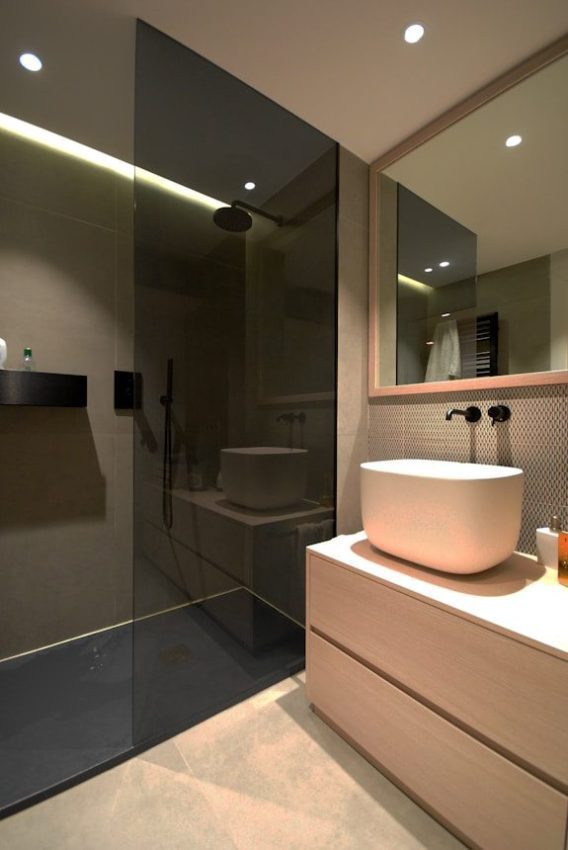
Why Choose MDF for Your Bathroom Project?
Medium-Density Fibreboard (MDF) has come a long way. While some purists insist on solid wood, MDF is actually superior for painted bathroom cabinetry because it doesn’t have a grain that will telegraph through your finish. It is incredibly stable, meaning it won’t warp or crack as easily as solid timber when the shower gets steamy.
When you choose to have your MDF made to measure, you eliminate the hardest part of DIY: the precision cutting. Most home workshops aren’t equipped with the industrial table saws required to get perfectly square, chip-free edges. Professional cutting services ensure that every piece arrives ready for assembly, saving you hours of sanding and frustration.
Choosing the Right Thickness
For a sturdy vanity, you’ll want a mix of thicknesses. While the main carcass usually requires 18 mm boards for structural integrity, 12 mm MDF is the “Goldilocks” thickness for decorative elements like shaker-style door slats, internal shelving, or back panels. It provides enough strength to hold its shape without adding unnecessary weight to the hinges.
Measuring Like a Pro: The Golden Rule
Before you place your order, you need an airtight cutting list. In a bathroom, where walls are rarely perfectly plumb, precision is everything.
- Measure the “Box”: Determine the height, width, and depth of your vanity carcass. Remember to subtract the thickness of the material from your internal pieces (e.g., if you are using 18 mm sides, your top and bottom plates must account for that 36 mm total loss).
- Account for Sinks and Plumbing: Don’t forget the “U-shape” cutout for the waste pipe. If you are ordering made-to-measure pieces, you can often specify these notches in advance.
- The Reveal: If you are making doors, decide if you want a “full overlay” (where the door covers the entire frame) or an “inset” look. Inset doors require much more precision, as you need a consistent 2 mm gap around all sides.
Moisture Protection: Essential for Bathrooms
The biggest myth about MDF is that it “blows up” like a sponge the moment it sees water. While standard MDF is porous, the modern DIYer has a secret weapon: MR (Moisture Resistant) MDF.
When ordering your custom panels, ensure you specify MR-MDF. It’s treated with a moisture-repellent resin (usually tinted green for identification). Even with MR-MDF, the key to longevity is in the sealing.
- Edge Banding: The edges of MDF are the most absorbent. Use an MDF filler or a dedicated edge sealer to close the pores before painting.
- Priming: Use a high-quality, oil-based primer or a specialist MDF primer to create a waterproof barrier.
- The Finish: A high-quality eggshell or satin bathroom paint will provide the final layer of defense against splashes.
Step-by-Step Assembly Tips
Once your made-to-measure panels arrive, the fun begins. Because the pieces are already cut to size, your job is simply to join them accurately.
1. Dry Fit Everything
Before you apply a single drop of glue, layout your panels. Check that the joints are flush and that the vanity sits level on your floor. Use shims if your bathroom tile is uneven.
2. Use the Right Fasteners
MDF is dense, so you must pre-drill your holes. If you drive a screw directly into the edge of an MDF board, it will likely split. Use countersunk screws and a bit of wood glue for a permanent bond.
3. Hinge Precision
If you’ve ordered custom doors, using a concealed hinge jig (like a Kreg jig) will allow you to mount your doors with that satisfying “soft-close” feel found in high-end showrooms.
Styling Your Custom Vanity
The beauty of a DIY vanity is the ability to customize. Since you saved money by ordering the MDF and assembling it yourself, you can splurge on the “jewelry” of the bathroom:
- Hardware: Oversized brass pulls or matte black knurled handles can make an MDF cabinet look like it cost thousands.
- The Top: Consider a custom-cut quartz or marble remnant to sit atop your handmade base.
- Lighting: Adding LED strip lighting to the kickplate (the recessed area at the bottom) creates a floating effect that is perfect for a modern aesthetic.
Conclusion: Professional Results on a DIY Budget
Upgrading your bathroom vanity doesn’t require a master carpenter’s skill set anymore. By utilizing a made-to-measure MDF service, you are essentially outsourcing the most difficult part of the build to a computer-controlled machine.
With a bit of careful measuring, a solid coat of moisture-resistant primer, and your choice of trendy hardware, you can create a centerpiece that is perfectly tailored to your home’s dimensions. It’s time to stop settling for “off-the-shelf” and start building for a perfect fit.