
Walking into a first session, or setting up your first home unit, comes with a small pile of unknowns: what to wear, how hard to push, what counts as normal soreness versus a warning sign.
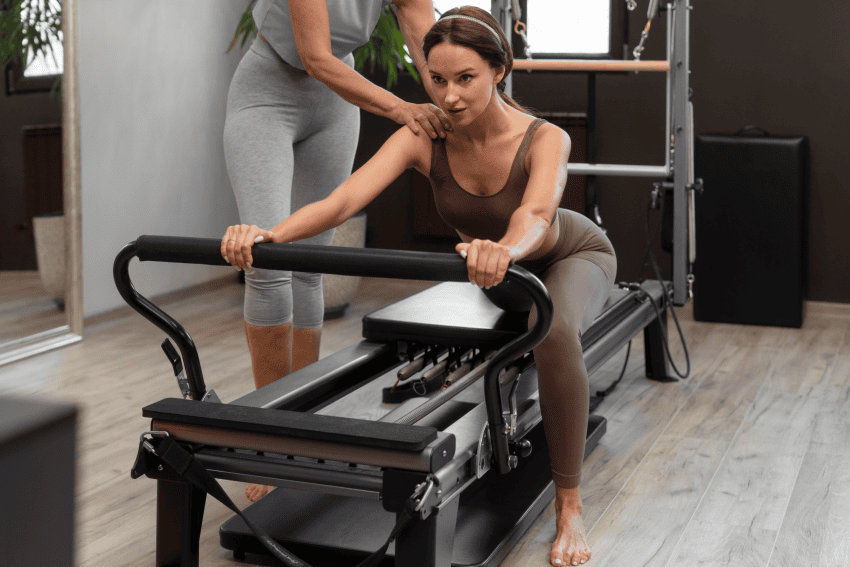
None of it is complicated once someone spells it out, but almost nobody spells it out ahead of time.
Most studios assume a baseline of familiarity that first-timers simply don’t have yet, and most home buyers are left piecing things together from scattered reviews and product descriptions.
Here’s the rundown, broken into the parts that matter.
Most of this comes down to a handful of small decisions made correctly and repeated, rather than any single piece of advanced knowledge. Get the basics right early, and the rest follows with far less trial and error.
Before Your First Session
- Fitted clothing, not baggy. Loose fabric snags on springs and hardware, and it hides your alignment from an instructor if you’re taking a class.
- Grip socks. Bare feet or regular socks slide on the carriage. That’s a safety issue, not just a comfort one.
- Leave the jewelry at home too, especially anything with hard edges: zippers, buckles, watch faces. You’ll feel every one of them once you’re lying down.
- Bring water and a small towel. It gets warmer in there than the slow pace lets on.
What the First Few Sessions Are Usually Like
- Balance feels strange before it feels natural. The carriage moves under you, and that sensation alone takes a session or two to get used to, separate from the exercises themselves.
- Muscles you didn’t expect to feel will show up the next day. Forearms, inner thighs, the small stabilizers around the hips- these get worked far more than a typical gym routine touches.
- Lighter spring settings are the right call early on. Pushing heavier resistance before your body understands the movement pattern usually backfires within the first two or three sessions.
- Progress shows up in control before it shows up in strength. Smoother transitions and steadier balance tend to arrive before any visible muscle change does.
Mistakes That Show Up Almost Every Time
- Rushing the tempo. Slowing down is the entire point, and speeding through a movement to finish faster defeats the purpose of the format.
- Holding your breath during effort. It’s a common instinct under load, and it raises blood pressure unnecessarily while reducing how well the deep core muscles engage.
- Skipping the footbar and handle setup checks. A loose or misaligned setup changes the resistance path in ways that aren’t obvious until something feels off mid-exercise.
- Comparing pace to someone else in the room. Spring settings and body mechanics vary enough between people that this comparison rarely means anything useful.
The American Academy of Orthopaedic Surgeons’ guidance on starting a strength training program points out that muscle imbalances, one side or muscle group working harder than another, are a leading cause of injury during new strength routines, and that getting form checked early, whether through a class or a few sessions with a trainer, meaningfully lowers that risk.
Building a Rhythm That Sticks
- Twice a week is plenty to start. Add a third session once the movements feel familiar.
- Pick a fixed day and time. “Whenever I have time” sounds reasonable and quietly falls apart within a month.
- Short and consistent beats long and occasional. Twenty-five focused minutes, twice a week, will beat one brutal ninety-minute session followed by a week of nothing.
- Even a basic checkmark on a calendar keeps the pattern visible. Memory alone won’t do that for you.
The Centers for Disease Control and Prevention’s physical activity guidelines call for muscle-strengthening work across all major muscle groups at least twice a week, on top of regular aerobic activity.
A well-structured reformer routine covers that on its own, no separate strength day required.
Signs You’re Ready to Increase Resistance
- The current spring setting feels manageable through an entire set without your form breaking down toward the end.
- You can hold a controlled tempo throughout a movement instead of losing control on the final few reps.
- Recovery between sessions gets shorter than it was those first few weeks.
- You stop needing a mirror or an instructor to tell you your alignment slipped. You just feel it.
None of these show up all at once. Tempo control usually comes first for most people, and the rest catches up a few weeks later.
If You’re Weighing a Home Setup
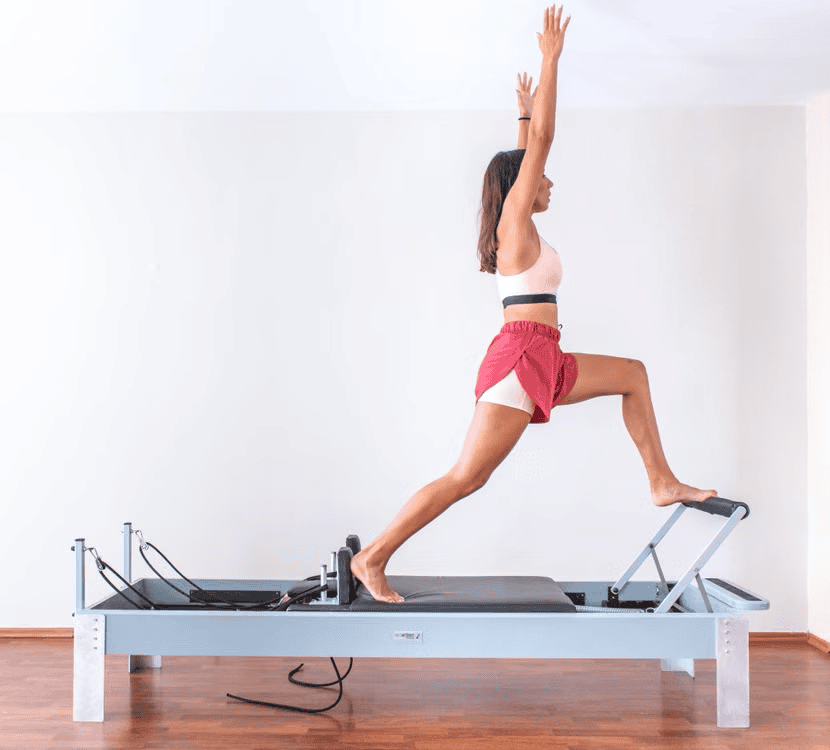
Past the studio-trial phase and thinking long term? The Core Collab’s range of Pilates reformer machines offers options for home training, but the same fundamentals still apply. Good form, controlled pacing, and gradual resistance matter just as much in a spare room as they do in a studio.
The equipment matters less than what you do with it.
A well-built machine sitting unused solves nothing. A modest one used on a fixed schedule, with attention paid to form over speed, will outperform almost any amount of spending on gear alone.
A Quick Note on Soreness
Sore muscles after a first session?
Completely normal, usually peaks around the 24-to-48-hour mark, then fades on its own. Sharp pain mid-movement is a different story. Stop.
Don’t push through it. Mention it to an instructor, or back off the resistance if you’re training at home, until it clears up.
- Regular muscle soreness: normal, gone within a few days
- Sharp or localized joint pain: not normal, deal with it before your next session
- Pain that gets worse instead of better with light movement: time to check in with a doctor or physical therapist
Most beginners overthink this distinction at first and undertrain out of caution that isn’t necessary.
A little muscle fatigue the next day is a normal part of adjusting to a new kind of resistance work, not a sign that anything went wrong.
Give it two or three weeks of consistent sessions before drawing any real conclusions about how your body responds, since the first handful of workouts rarely reflect what a settled routine feels like once things click.