
Key Takeaways
- Choose a fence material based on its primary job, not appearance alone.
- Climate, soil, drainage, wind, pets, livestock, and local rules all affect performance.
- Wood, vinyl, aluminum, steel, chain link, and agricultural fencing each solve different problems.
- Posts, gates, footings, and hardware are as important as the fence panels themselves.
- Compare lifetime maintenance and repair needs alongside the installed price.
The right fence should make a property safer, more useful, and easier to maintain. Whether the goal is privacy around a home, pet containment, pasture division, or stronger access control through industrial fencing, the best material depends on how the fence will be used every day.
A low-cost option can become expensive if it needs frequent repairs, while a premium material may not be worthwhile if it provides features the property does not need. Start with function, then weigh appearance, site conditions, maintenance, and budget.
Start With the Purpose of the Fence
No material is best for every situation. A tall, solid fence may be ideal for privacy, but it may be a poor choice where visibility, airflow, or wind resistance matters more. Identifying the top one or two goals prevents decisions based solely on color or initial cost.
Common fence purposes include privacy from neighboring homes or roads, containment for children and pets, livestock management, pool-area safety, property-line definition, garden protection, equipment security, and controlled vehicle access. A temporary construction barrier also has very different needs than a permanent boundary fence.
Compare the Main Fence Materials
Each material has useful tradeoffs. Review the following options against the property’s demands.
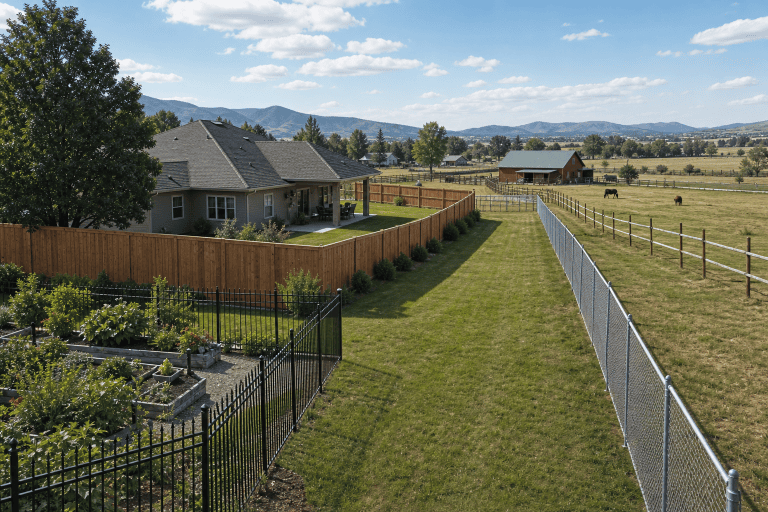
- Wood: A versatile choice for privacy fences, gardens, and traditional residential styles. It can be cut and adapted easily, but it needs periodic inspection for moisture damage, loose boards, insects, and finish wear.
- Vinyl: Offers a clean, consistent appearance and does not rot like wood. It generally requires less routine upkeep, although severe impacts, shifting ground, or extreme temperatures can damage panels.
- Aluminum: Lightweight, corrosion-resistant, and well-suited to decorative boundaries, front yards, gardens, and pool areas. Its open design provides limited privacy and may not suit high-impact locations.
- Steel: Provides strength and rigidity for commercial properties, secure perimeters, and high-use gates. Protective coatings and suitable fasteners are important where corrosion is a concern.
- Chain link: A practical option for large lots, pet runs, sports areas, utility spaces, and many agricultural applications. It is durable and efficient, though privacy screening may be necessary in residential yards.
- Farm fencing: Includes woven wire, rail systems, field fencing, and other designs intended for animal control or broad land coverage. Match the wire spacing, height, and strength to the animals being contained.
Material specifications, coatings, fittings, and construction practices can affect long-term results. Reviewing recognized fence material standards can help buyers understand why similar-looking products may perform differently.
Account for Climate, Soil, and Site Conditions
A fence that works well on dry, level ground may perform poorly in wet soil or a windy open area. Review rainfall, humidity, freeze-thaw cycles, salt exposure, prevailing winds, slopes, drainage paths, tree roots, and equipment traffic before selecting materials or planning post locations.
Posts are especially important. Soft, waterlogged, sandy, rocky, or clay-heavy soil can change footing requirements and affect stability. Standing water near posts can accelerate deterioration, while shallow footings may allow leaning or heaving over time. Good drainage and a sound layout often matter as much as the visible fence material.
Match Design to Privacy and Safety Needs
Privacy and security are related but not identical. Solid wood or vinyl panels can block views, but they also catch more wind than open fencing. Aluminum and ornamental steel allow visibility around pools, driveways, and front yards, but they do not create a visual barrier.
Details That Affect Function
- Fence height and local height limits.
- Spacing between pickets, rails, or mesh openings.
- Bottom clearance for small pets or uneven ground.
- Gate latch placement and ease of use.
- Self-closing and self-latching hardware where appropriate.
- Additional reinforcement for escape-prone animals or high-traffic access points.
Compare Upfront Cost and Long-Term Maintenance
A useful fence budget includes more than panels and installation labor. Account for old-fence removal, brush clearing, grading, concrete, post upgrades, gates, delivery, permits, drainage improvements, and future repair work. A longer fence line or difficult terrain can substantially change the installed cost.
Wood may offer a lower starting price and easy design flexibility, but it can require staining, sealing, painting, or board replacement. Vinyl and aluminum often reduce the need for routine maintenance, though replacement parts and repairs may cost more in certain designs. Ask whether a damaged section can be repaired individually or if an entire panel must be replaced.
Do Not Overlook Gates, Posts, and Hardware
Gates receive more stress than most fence sections. A sagging gate, weak latch, undersized post, or corroded hinge can undermine an otherwise well-built project. Plan for pedestrian access, vehicle access, mower clearance, livestock equipment, gate swing direction, and grade changes.
Review post size and spacing, footing depth, drainage around posts, hinge strength, latch operation, and corrosion-resistant fasteners. Sliding gates may be useful where a swinging gate would obstruct a driveway, while wide openings may need heavier posts and more substantial hardware.
Check Lines, Permits, and Community Rules
Fence requirements can vary by city, county, neighborhood, and property type. Before ordering materials, confirm the property line, check setbacks and height limits, review homeowner association requirements, and identify easements or drainage areas. Pool, agricultural, commercial, and corner-lot fences may have additional requirements.
Call 811 before you dig so underground utility lines can be marked. This step is important even for a small residential fence because buried lines may be closer to the surface than expected.
Use a Simple Fence Selection Process
- List the two most important goals, such as privacy and pet containment.
- Measure the approximate fence line, corners, gates, and grade changes.
- Note drainage, soil type, slopes, roots, and site-access limitations.
- Narrow the list to two or three materials that fit the job.
- Compare maintenance requirements, repair options, and expected service life.
- Check property rules, permits, utility locations, and boundary details.
- Request detailed estimates that separate materials, labor, gates, removal, and site preparation.
Common Questions About Fence Materials
What Is Best for Privacy?
Wood and vinyl are common privacy choices because they can be installed with closely spaced pickets or solid panels. The right option depends on the desired appearance, wind exposure, maintenance tolerance, and budget.
Which Material Needs the Least Maintenance?
Vinyl and aluminum typically need less routine maintenance than wood. Even low-maintenance fences still need cleaning, hardware checks, and occasional adjustments.
Is Chain Link Good for Large Properties?
Chain link can be a strong choice for large areas, dog runs, sports spaces, and utility boundaries. Privacy slats or screening can be added if visual coverage is needed.
Final Considerations
The best fence balances function, appearance, durability, maintenance, site conditions, and cost. Define what the fence must accomplish, select materials that fit those needs, and plan the posts, gates, drainage, and rules carefully. That approach supports a fence that works reliably long after installation is complete.