
Replacing kitchen cabinets is one of the most impactful and expensive parts of a kitchen renovation. On average, a full cabinet replacement costs $4,500 to $15,000 for a typical kitchen, including materials and installation, with many homeowners spending around $8,000 to $9,000. High-end custom cabinetry can push total costs beyond $20,000, while budget-friendly stock cabinets remain closer to the lower end of the range.
To plan these expenses accurately, many homeowners and contractors rely on construction estimating services, which provide detailed material takeoffs, labor cost analysis, and realistic budget forecasting to avoid surprises during the project.
Here, you will know the factors affecting the replacement cost of the cabinet, the effect of design and layout alteration on the final amount, and what happens in real life, considering the typical conditions of the home.
6 Key Steps That Affect the Cost of Replacing Kitchen Cabinets
A number of elements determine the general cost of replacing the kitchen cabinets. All of them are related to the work in construction, the properties of materials, the local circumstances, and the complexity of the design. We are going to examine the most significant variables. More moving parts mean more adjustments and more time required to calibrate.
Others explore opening estimation, which focuses on structural openings, wall modifications, and cabinet fit adjustments that influence labor needs. By accounting for these factors upfront, installers can achieve a more precise fit, reduce the risk of misalignment, and prevent damage to the cabinetry or surrounding surfaces.
1. The Type and Construction Method of a Cabinet
The construction techniques used to construct cabinets are varied, and each one has a consequence for durability and the time taken to install. Some key factors include:
- Box framing (framed vs. frameless)
- Dovetail, dowel, and mortise-and-tenon joinery types.
- Density and thickness of the materials.
- Interior decoration and resistance to moisture.
To consider, when a framed cabinet is installed with intricate joinery, it would need greater accuracy, which takes more labor time. Frameless cabinet systems usually require tighter tolerances because the alignment of the frame directly affects the spacing of the doors.
2. Kitchen Size and Layout 
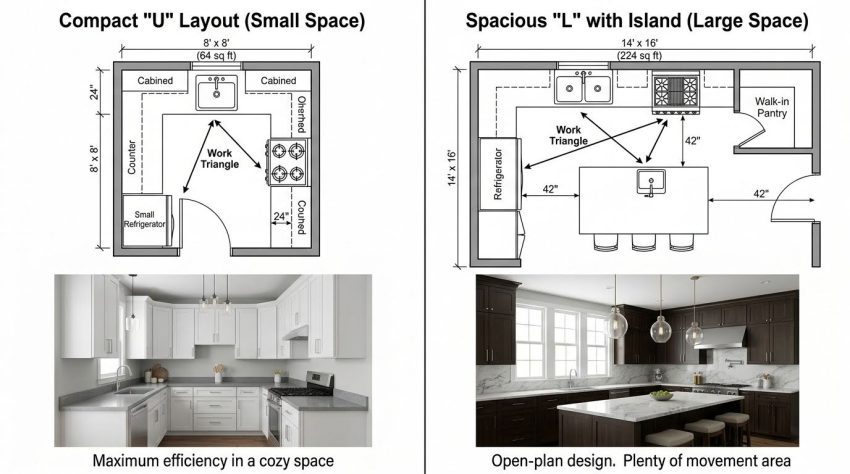
The size of your kitchen will determine the number of cabinets that have to be installed and the degree to which the process will become labor-intensive. Galley, U-shaped layout, L-shaped layout, and peninsula layouts all have their installation sequences and modifications.
3. Material Selection
The density of material influences workability, weight, and installation needs. Heavy materials will need support blocks that are stronger, heavier-weight fasteners, and closer attention so as not to damage the surface.
Some materials commonly used in the construction of cabinets include:
- Plywood with varying plies
- Medium-density fibreboard (MDF).
- Particle board
- Hardwood panels
- Veneers and laminates
4. Italics Overprinting of Cabinets
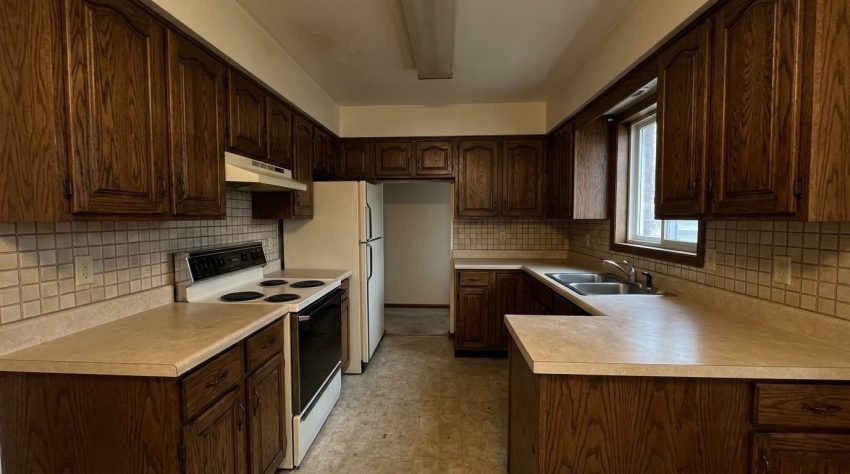
Dismantling old cabinets could be more complicated than one anticipates it will be. Cabinets can be nailed, glued, or screwed onto unevenly spaced studs. The older kitchens might have been constructed around the appliances or the flooring, making it difficult to detach them.
Probable factors of removal are:
- Damage to walls in the course of removal.
- Presence or absence of plumbing pipes and electric wires behind cabinets.
- Flooring should also extend under cabinets.
5. Wall Requirements and Structural Conditions
Lack of evenness in the walls, uneven floors, and uncertainty in the positioning of the studs influence the time of installation. The installers would have to shim, plane, or adjust the position of the cabinets to ensure they are level.
Usual conditions of the wall that impact replacement:
- Bowed or warped walls
- Base cabinets that should be adjusted due to uneven floors.
- Studs not spaced on 16″ centers
- Previous installations of the drywalls.
6. Hardware Select and set-up
Although no product specifications are stated, the configuration of hardware will influence the work on installation. Drawers must be tracked correctly. Pantry tall units must be anchored. Hinges need to be adjusted in various directions in order to create an even exposure.
Components that affect the time spent on labor: Hardware components.
- Drawer stacks vs. doors
- Corner pull-out systems
- Soft-close hinges
- Shelf arrangements within the company.
The higher the number of moving parts, the higher the number of adjustments and the time it takes to calibrate.
Important Components That Affect the Cost of Replacing Kitchen Cabinets
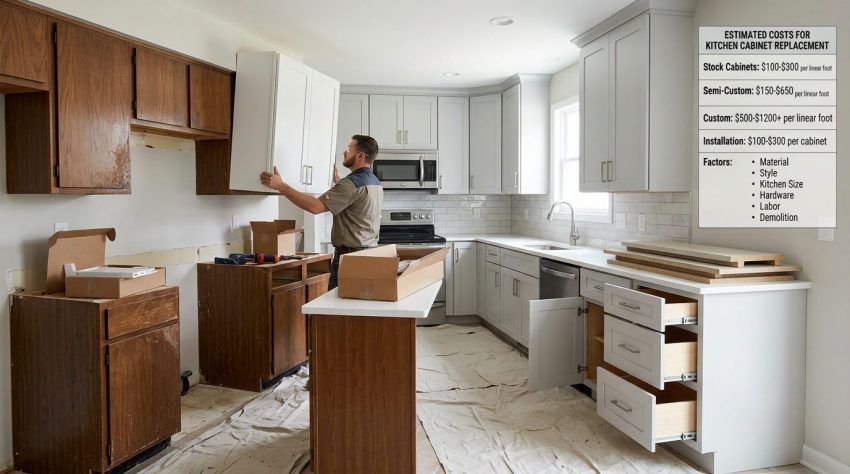
In order to know the overall price of the replacement of the kitchen cabinets, subdivide the project into large parts. Each type has an effect on the labor and material needs.
1. Cabinet Boxes
Such are the fundamental frameworks. Depending on the size, there are 1020 cabinet boxes required in a kitchen or more. Each box influences:
- Assembly time
- Mounting requirements
- Structural support impact
- Further stress-point reinforcement.
2. Doors and Drawers
There are varieties of doors depending on their style, thickness, and opening mechanism. Drawers need further assembly, tracks, and adjustment.
Factors that complicate doors and drawers include:
- Full-overlay layouts which involve a tight alignment.
- In need of glass-front doors that have extra stabilization.
- Deep drawers that require greater slide mechanisms.
3. Cuts, Fillers, and Accessories
Finishing components are essential for creating a built-in appearance, even in simple cabinet installations. Accurate interior exterior finishes estimating helps determine the materials and quantities required, ensuring precise planning, reduced waste, and a seamless final result.
Ordinary features are:
- Crown molding
- Toe-kick boards
- Light rail molding
- Edge trims
- Uneven gap filler strips.
These parts involve scribing and special cuts, which consume time.
4. Countertop Disconnection/Reconnection
In case a kitchen has an in-house counter, it has to be stripped away before replacing the cabinets. Certain countertop materials have to be removed very carefully lest they crack or become stressed.
Counter reasons that affect the replacement of the cabinet:
- The countertop should or should not be reusable.
- Sink reconnection, plumbing reconnection.
- Countertop reinstallation leveling changes.
5. Additional Modifications
At times, a change of cabinets also needs alteration of other elements.
Other alterations that are typical are:
- Moving the electric sockets.
- Adjusting plumbing routes
- Filling in/opening up of wall openings.
- Strengthening studs on the sides to which the load-bearing cabinets are fixed.
These are some of the factors that have a great impact on the labor requirements.
How Kitchen Layout Changes Affect Cabinet Replacement Costs
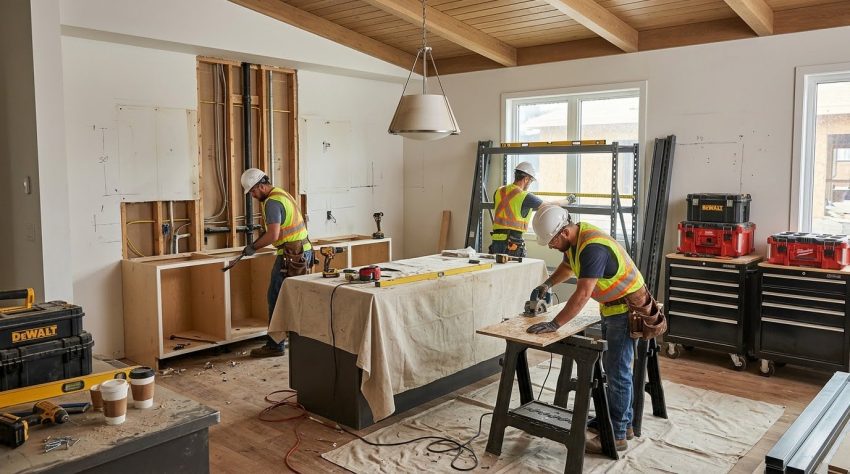
During the replacement of cabinets, many owners of the home change their kitchen arrangement. The complexity is dependent on layout adjustments.
1. Structural Modifications
When you are going to take a wall down or make an opening bigger, structural reinforcement is possible.
Typical changes include:
- Modifying peninsula organizations.
- Increasing the size of the kitchen.
- Installing appliances in new cabinet openings.
- Constructing new soffits or eliminating soffits.
2. Increasing Cabinet Height
Installation of higher upper cabinets alters:
- Ladder or scaffolding use
- Additional anchoring
- Heavier cabinet handling
- More upper trim pieces
3. Adding a Kitchen Island
Islands require:
- Precise floor anchoring
- Installation of electrical outlets.
- Cabinets or panels of custom sizes.
- Coordination with flooring
4. Incorporating Pantry Units
Tall pantry units pose a challenge in the handling process and also need numerous anchors and need to be leveled carefully to prevent the risk of tipping over.
Real-World Factors That Affect Cabinet Replacement Costs
The actual kitchens differ greatly. The following are typical situations that have a serious impact on cost.
Older Home With Warped Walls
The walls and floors of old houses are usually uneven. Installers may need to:
- Shim base cabinets
- Plane filler panels
- Hold the cabinet on the wall until it is straight.
- Fix drywall before installation.
Estimating the Cost of Replacing Kitchen Cabinets
Although it does not provide pricing or service advice, you can make your own estimate of the cost of replacing the cabinet using the measurable components.
1. Count Cabinet Boxes
Document:
- Number of base cabinets
- Number of wall cabinets
- Number of tall cabinets
2. Measure Linear Feet
Record the length of the cabinets along the walls. This can be used to estimate material and labor requirements.
3. Identify Specialty Units
These include:
- Corner units
- Lazy-susan spaces
- Drawer banks
- Sink bases
- Tall pantry units
4. Conditions of Document Walls and Floors
Check for:
- Levelness
- Electrical lines
- Plumbing obstacles
- Uneven studs
5. Determine Layout Changes
A change in any structure introduces layers of work.
Common Mistakes to Avoid When Planning Cabinet Replacement
These mistakes can be avoided to help homeowners plan better.
1. Ignoring Wall Conditions
It is common knowledge that people presume that walls are straight. As a matter of fact, walls bow, slope, or move.
2. Removal Effort Should be Underestimated.
The process of removing the old cabinets may end up being more time-consuming than anticipated because of concealed fasteners or poor drywall.
3. Failure to Consider Appliance Fit.
The placement of the appliances can be influenced by the tiniest variation in the cabinet width.
4. Ignoring Clearance Requirements.
Drawer stacks, refrigerator doors, and oven doors require enough clearance.
5. Forgetting About Trim Pieces.
Fillers, trims, and moldings are important to make the finished look much more refined, but they need extra work.
Should Cabinet Replacement, Refacing, or Repair?
In some cases, it is more rational to use cabinet replacement.
Replacement is subsequently used when:
- Cabinet boxes are in a bad condition.
- Layout is no longer very effective.
- You require some great structural or storage modifications.
- Structural components are damaged by moisture.
- Hardware in the doors and drawers is no longer fitting well.
Conclusion
The cost of replacing the kitchen cabinets depends on various factors that influence the cost of labor, material requirements, location, and layout adjustment. The overall effort is influenced by cabinet construction, the size of the kitchen, irregularities in the walls, and difficulties in their removal.
By subtracting the individual components, a picture of the entire scope is formed, breaking down the elements of the picture to include cabinet boxes, doors, drawers, trim, and structural conditions.
This is as a result of the fact that with the detailed knowledge of these variables, by approaching the replacement of the cabinet, you have realistic expectations and are able to plan. This will assist you in testing the layouts, estimating the structural adjustments, and the way the installation will proceed in a manner that is congruent with real-life kitchen settings.
FAQs
1. What is the ideal time to change kitchen cabinets?
The replacement of a cabinet normally requires a few days to a few weeks to be completed, based on the size of the kitchen, the condition of the wall, and the existence of structural changes. Elimination, repair of walls, installation of cabinets, and finishing of trims all come at a cost of time. The bigger the kitchen, the more specific the adjustments of corner kitchen units or tall pantry cabinets need to be, and the more time the project will take.
2. What are the factors that affect the labor required to replace kitchen cabinets?
The alignment of the wall, the number of cabinet boxes, the complexity of the trim, and the need to reposition the appliance or plumbing are some of the factors that affect labor. Walls or floors that are not straight may need further shims and readjustments. Tall units, specialty cabinets, and drawer stacks are also units that need to be calibrated more accurately during installation.