
Non-profit directors constantly face a difficult balancing act during fundraising initiatives. You need to provide accessible donation entry points for everyday supporters who want to contribute to the community. At the same time, you must capture high-value corporate sponsorships and major gifts to actually hit your financial targets.
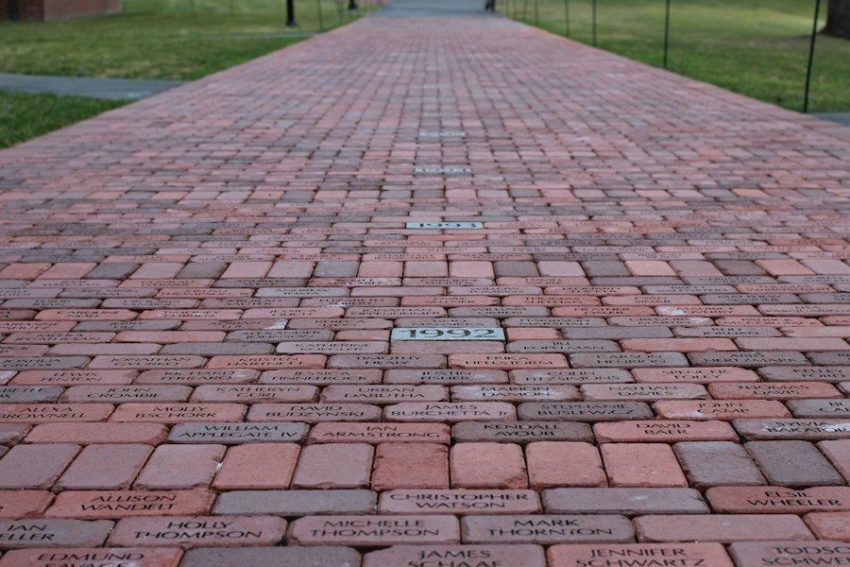
Relying entirely on small, widespread donations is rarely enough to fund a major project. This means your fundraising structure must actively accommodate and encourage these larger, campaign-defining contributions.
The traditional solution for many organizations is a brick fundraiser, but too many campaigns default to a standard, flat-rate paver approach. Offering a single brick size for a flat $100 donation leaves significant money on the table and fails to attract local businesses looking for substantial recognition. The solution is abandoning this one-size-fits-all method and adopting a strategic, tiered pricing model for your engraved bricks.
By offering tiered pricing combined with premium, durable materials, organizations can maximize donor participation and drastically increase total campaign ROI. A well-structured pricing tier naturally guides donors toward higher gift amounts while giving corporate sponsors the prominent visibility they demand.
Why Premium Campaigns Require Permanent Materials
Capital campaigns are rarely quick sprints. They are sustained, multi-year efforts that require extensive planning, execution, and donor stewardship. The 2023 Capital Campaign Benchmark Report found that campaigns lasted about 3.2 years on average.
Because these initiatives run for years, the physical rewards you promise your donors must be incredibly durable. Long-running campaigns require weather-resistant rewards that will not chip, peel, or fade before the campaign even concludes. If an early donor visits your site two years later and sees their family name eroding from a cheap paver, their trust in your organization will vanish.
This expectation of quality increases exponentially as donation amounts rise. Donors paying top dollar expect a permanent mark, making high-detail customization absolutely essential for corporate logos and fine text. A local business writing a $1,000 check for a premium placement will not accept a blurry or degrading logo.
When asking donors to contribute hundreds or even thousands of dollars to a capital campaign, the physical recognition must reflect the value of their gift. Utilizing customizable engraved bricks designed primarily for donor recognition ensures that intricate logos and text remain crisp and weather-resistant, justifying a premium price point and guaranteeing a permanent legacy.
The Psychology Behind Tiered Brick Pricing
What is the psychological benefit of offering three distinct pricing tiers? The answer lies in how the human brain evaluates value and makes purchasing or donation decisions. When presented with a single price, a donor simply asks themselves, “Do I want to spend this amount or not?” When you present multiple options, the question shifts from “Should I donate?” to “Which level is right for me?”
Placing a premium, high-priced corporate option next to a standard option completely changes the donor’s perspective. If your campaign only offers a $150 brick, a $250 donation might feel like a stretch to a mid-level donor. But if that $250 option sits right next to a premium $1,000 corporate package, the $250 middle-tier suddenly feels highly affordable and deeply attractive.
This three-tier framework solves the campaign director’s primary dilemma. It prevents organizations from alienating lower-income supporters who want to participate at the base level. Simultaneously, it ensures you do not leave money on the table from wealthy philanthropists and local business owners who have the budget for a premium placement.
Structuring Your Brick Campaign Pricing Tiers
Creating the right pricing structure requires balancing accessibility with ambition. You need a clear, actionable framework to price different sizes and formats of engraved bricks effectively.
The Entry-Level Tier (Standard 4×8 Bricks)
How do you determine the base price for a standard 4×8 engraved brick? This tier is the foundation of your community engagement. The goal here is volume and widespread participation, allowing families, alumni, and everyday supporters to leave their mark.
Set a base price—typically between $100 and $150—that easily covers the manufacturing and installation costs while remaining highly accessible to everyday community members. This price point ensures that nearly anyone who wants to support your cause can afford to do so without hesitation.
However, you must strategically detail the limitations of this tier to gently encourage donors with higher capacity to upgrade. Restrict the 4×8 entry-level bricks to text-only engravings, usually capping it at 3 lines of text with 20 characters per line. By keeping this tier basic, you naturally push donors who want to include a graphic, a logo, or a longer message into your higher-priced tiers.
The Anchor Tier (Premium 8×8 Bricks)
How much should we charge for premium 8×8 bricks or corporate logo placements? This is where your campaign generates its most significant profit margins. You are no longer just selling a brick; you are selling premium real estate and permanent community visibility.
Recommend pricing this tier significantly higher, typically ranging from $500 to $1,000 or more. This tier actively targets local businesses, major sponsors, prominent alumni, and members of your board of directors. These individuals and entities have larger budgets and are looking for a way to make a substantial, highly visible impact.
Highlight the unique value proposition for businesses: the ability to transfer complex graphics and full corporate logos onto the larger brick surface. An 8×8 brick provides double the space, allowing a company to feature its distinct branding in a permanent public installation. This transforms the donation from a simple charitable gift into a valuable, long-term marketing and public relations asset for the sponsor.
The Upsell: Mini Bricks and Donor Replicas
How can replica bricks or mini bricks be used to increase the average donation size? Maximizing campaign revenue isn’t just about selling more spots in the ground; it’s about increasing the total cart value of each individual donor.
Offering exact miniature or full-scale replicas creates a high-margin campaign revenue add-on that requires very little extra effort from your team. Donors love the idea of having a copy of their installation to keep at home. These replicas are typically fitted with felt feet, making them perfect for immediate home or office display on a desk or bookshelf.
Suggest packaging these replicas with optional Certificates of Authenticity as a premium “thank you” gift for your highest-tier donors, or sell them as an upsell during the checkout process. A donor who just spent $250 on a commemorative brick is highly likely to spend an additional $40 to $50 for a display replica, significantly boosting your overall campaign profitability.
Calculating ROI and Projecting Campaign Revenue
How do we project total revenue and present this pricing model to the board? Securing buy-in from your board of directors requires clear financial arguments and undeniable math. They need to see exactly how this tiered strategy translates into net funding for the organization’s goals.
To make this clear, include a structured financial breakdown in your board presentation. A simple comparison table clearly shows the board how high the margins can climb when you introduce premium sizes and replicas into the mix.
| Brick Tier / Product | Estimated Vendor Cost | Suggested Donor Price | Projected Profit Margin |
|---|---|---|---|
| Standard 4×8 Brick (Text Only) | $20 – $25 | $150 | ~83% ($125+ profit) |
| Premium 8×8 Brick (Custom Logo) | $40 – $50 | $750 | ~93% ($700+ profit) |
| 4×8 Replica Brick (Add-on) | $15 – $20 | $50 | ~60% ($30+ profit) |
Note: Vendor costs vary by material and shipping. Use exact quotes from your provider when finalizing board documents.
Looking at these projections, board members will inevitably ask: What are the hidden costs of a brick campaign that could eat into our profit margins? This is a valid concern, as long-term maintenance can quickly drain the funds a campaign worked so hard to raise.
Choosing laser engraved bricks eliminates the long-terMaximize donor participation and total ROI with a strategic tiered pricing model for your engraved brick campaign. Learn how to structure tiers today.m hidden maintenance costs associated with older methods. Traditional sandblasting techniques rely on epoxy fillers or paints to make the text readable. Over time, UV rays and harsh weather cause these fillers to peel, fade, and degrade, forcing the non-profit to spend money replacing unreadable bricks. Laser engraving physically alters the brick material to create a dark, permanent mark that requires zero maintenance, fully protecting your projected profit margins.
Conclusion
Moving beyond a flat-rate $100 paver to a strategic, tiered pricing model is the most effective way to maximize both everyday community participation and high-yield campaign revenue. By offering accessible entry points alongside premium corporate packages, you cater to every level of donor capacity without leaving money on the table.
Always remember that matching premium donation tiers with permanent, laser-engraved quality is essential for building and maintaining donor trust. When people invest hundreds or thousands of dollars into your organization, they expect a legacy that will withstand the test of time.